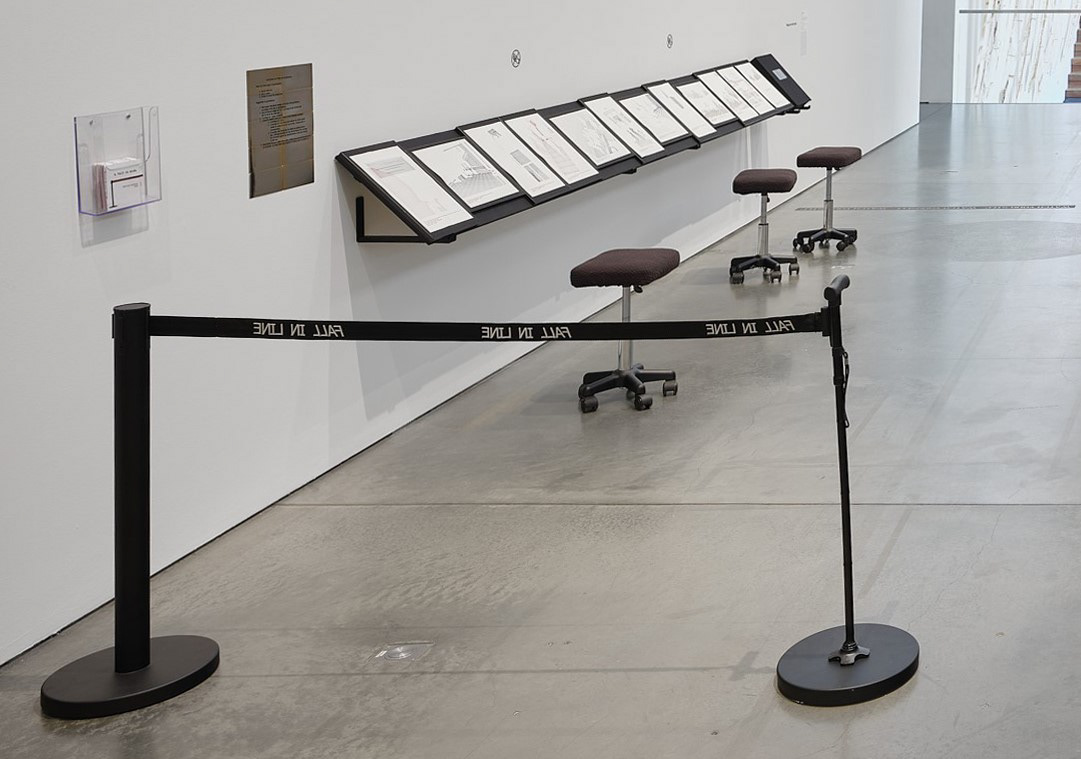
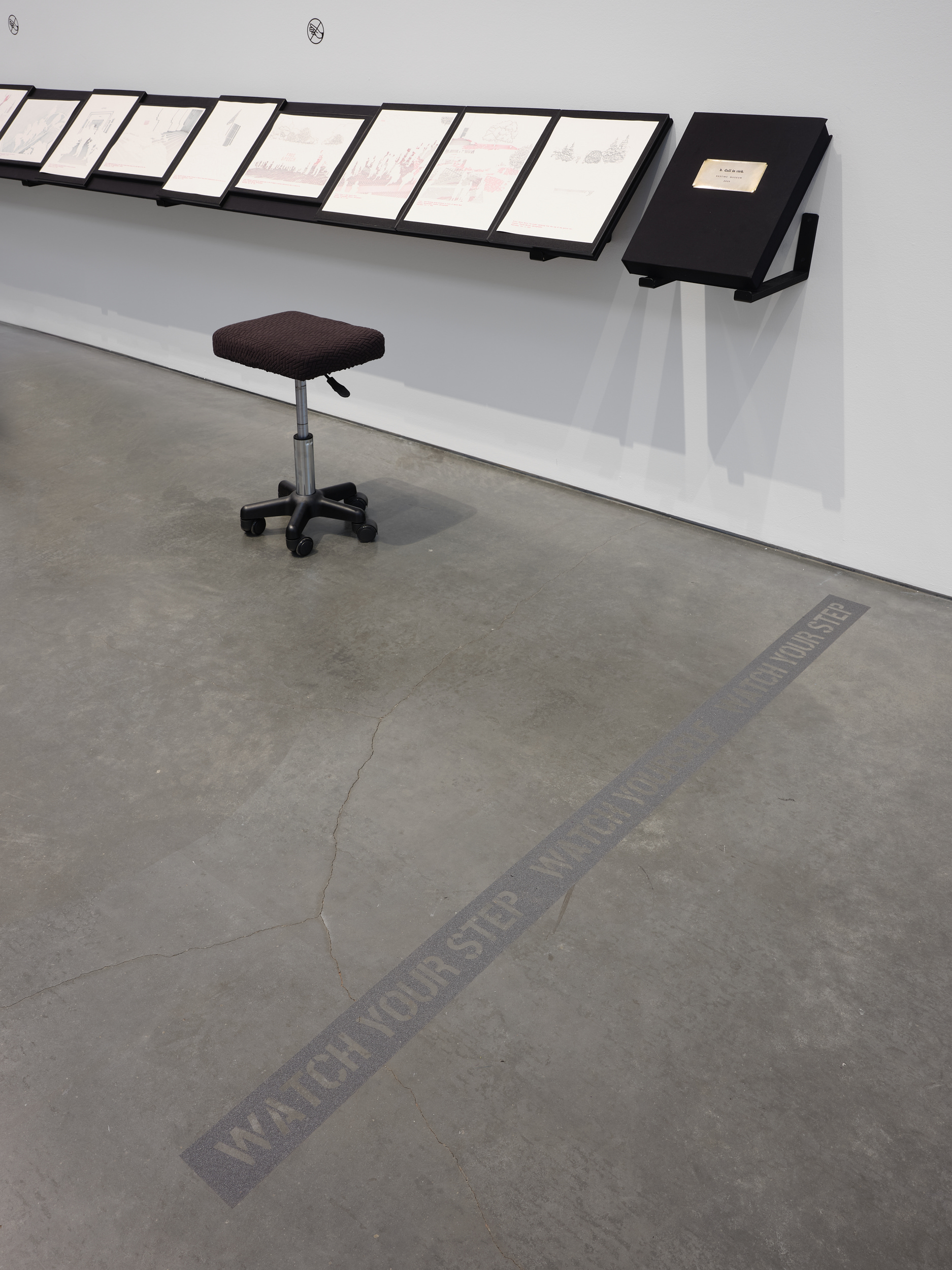
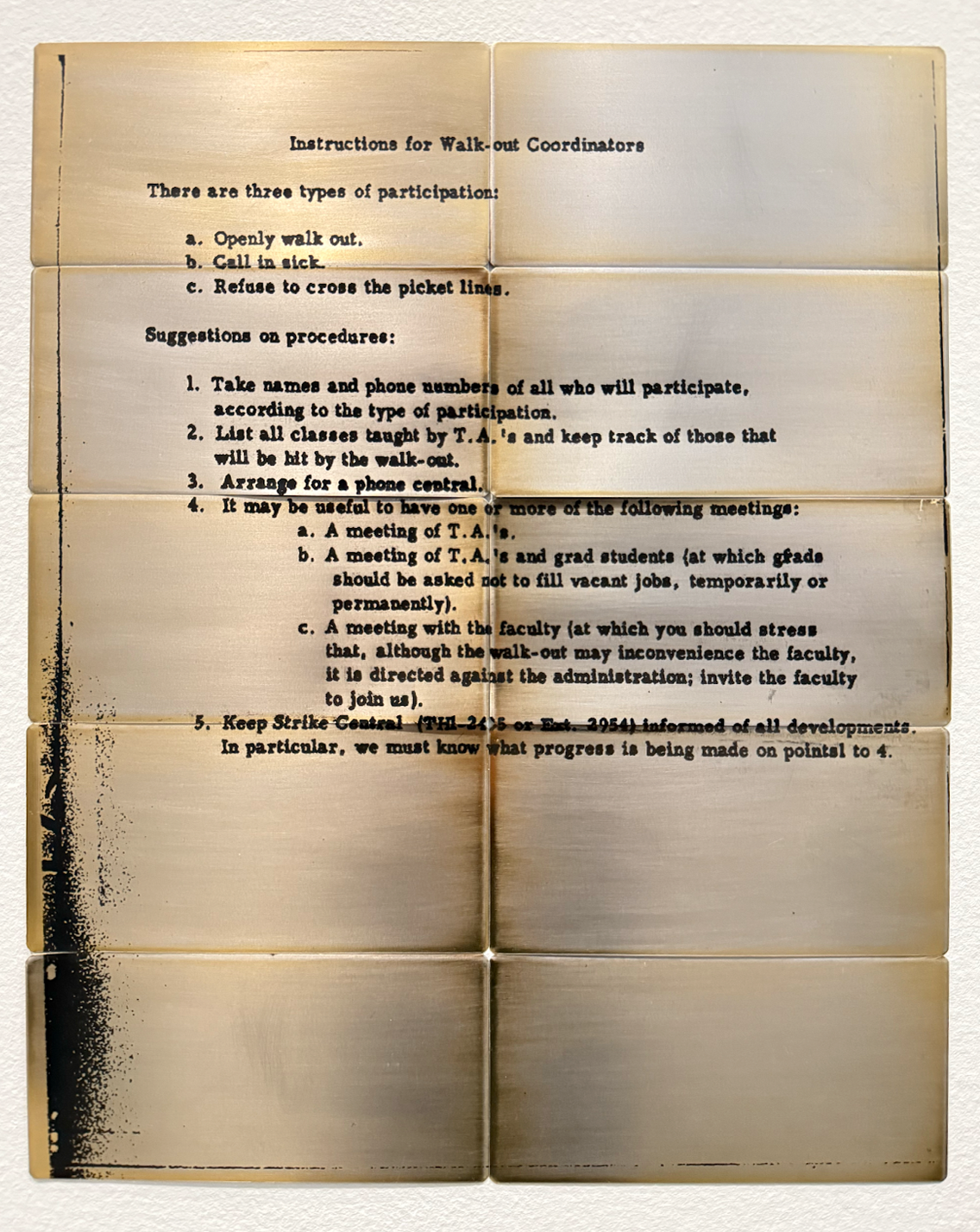
‘b. Call in sick.’ takes its title from a type of participation listed in the document, ‘Instructions for Walk-out Coordinators,’ issued in 1964 during the Free Speech Movement (FSM) at UC Berkeley, to rethink how movements may move with exhausted and non-normative bodies. Here, I redact and abstract the FSM’s photographic archive in embossed drawings to question the archive’s function as witness and its capacity to hold disabled narratives should all the bodies documented in it have called in sick or been unable to access the site.
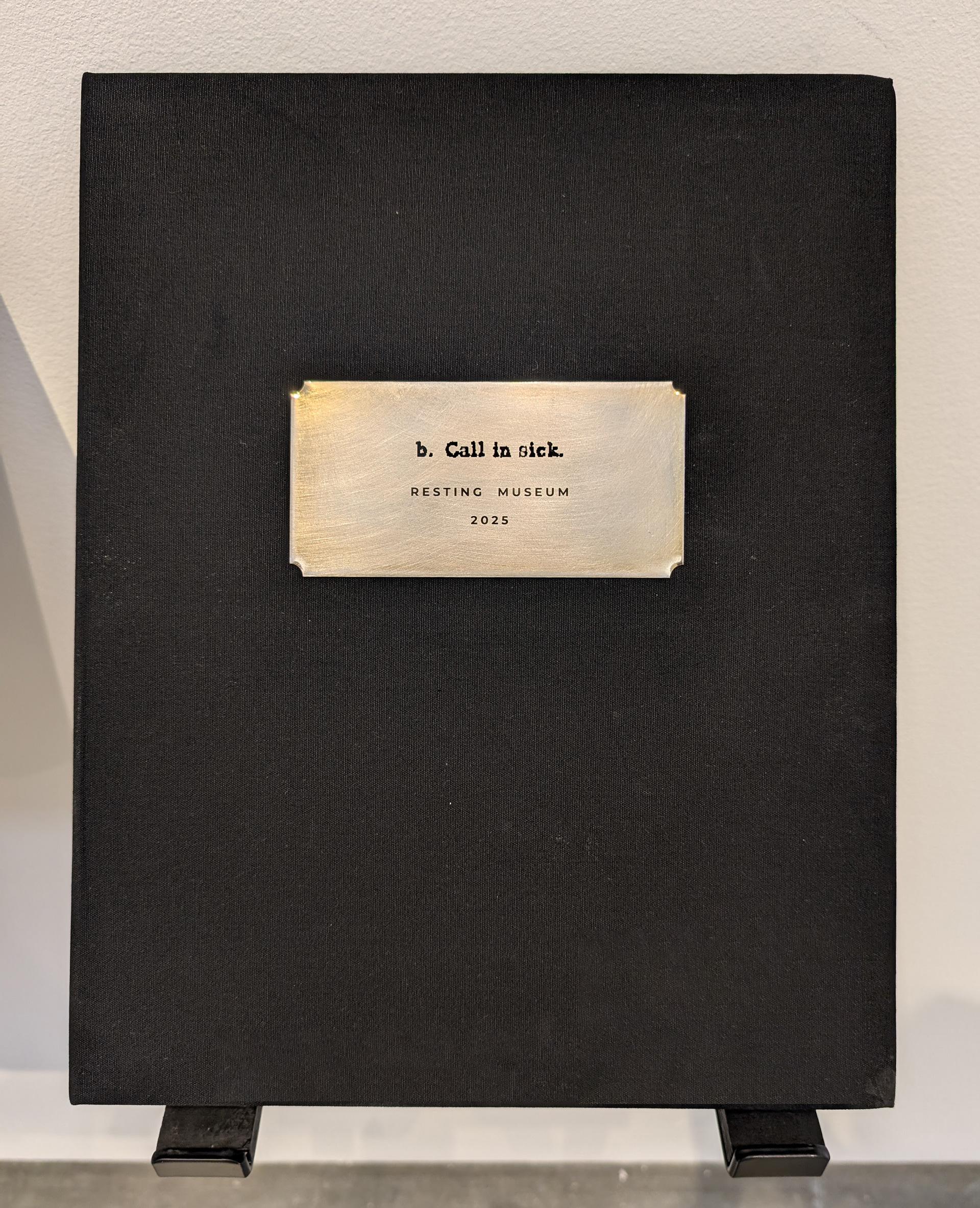
Title: b. Call in sick.
Medium: Fisher space pen ink and embossing on paper; engraved stainless steel plaques; archival storage box
Size: (Embossed Drawings) 8 drawings – 14” x 11”; 4 drawings – 11” x 14”
Medium: Fisher space pen ink and embossing on paper; engraved stainless steel plaques; archival storage box
Size: (Embossed Drawings) 8 drawings – 14” x 11”; 4 drawings – 11” x 14”
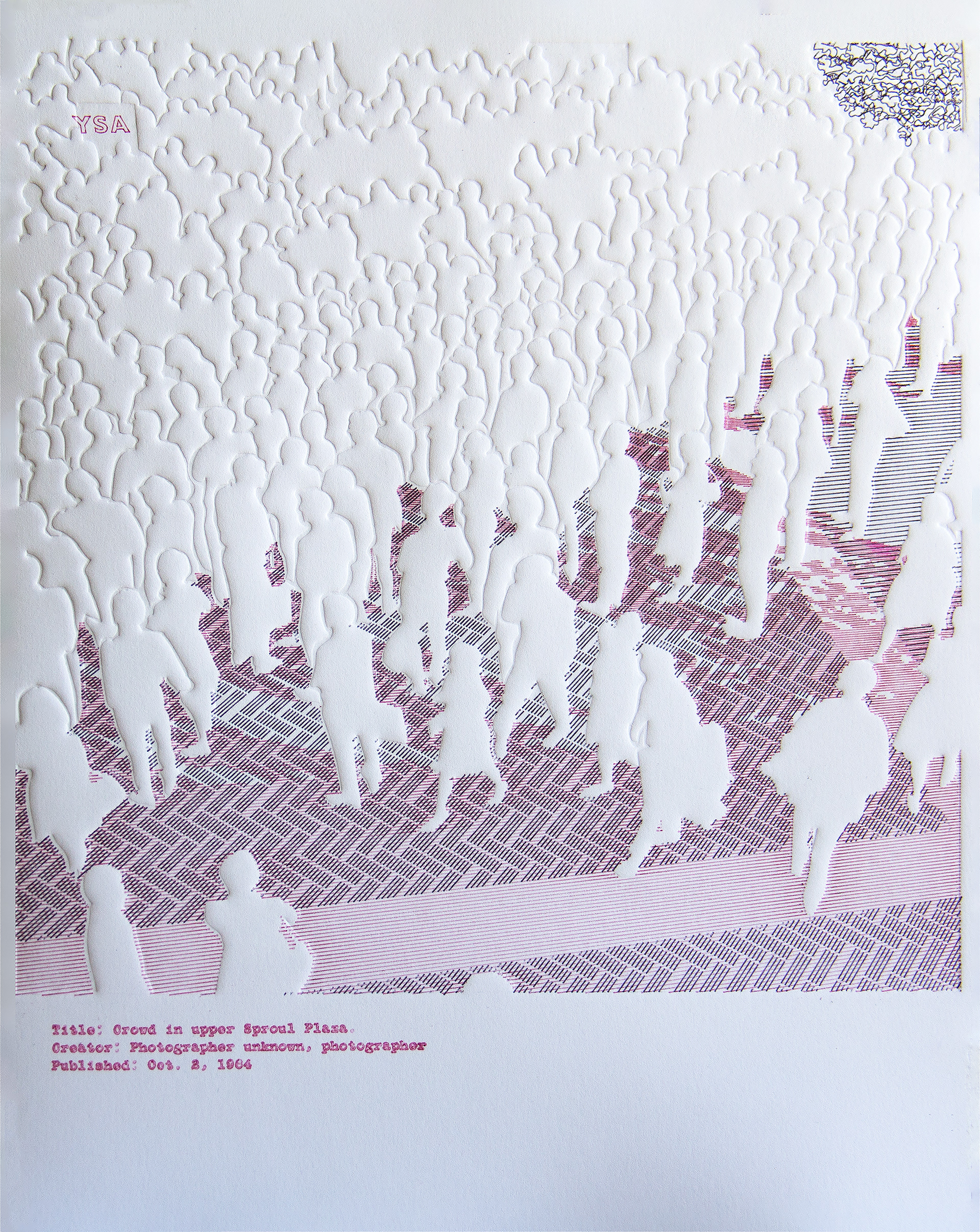
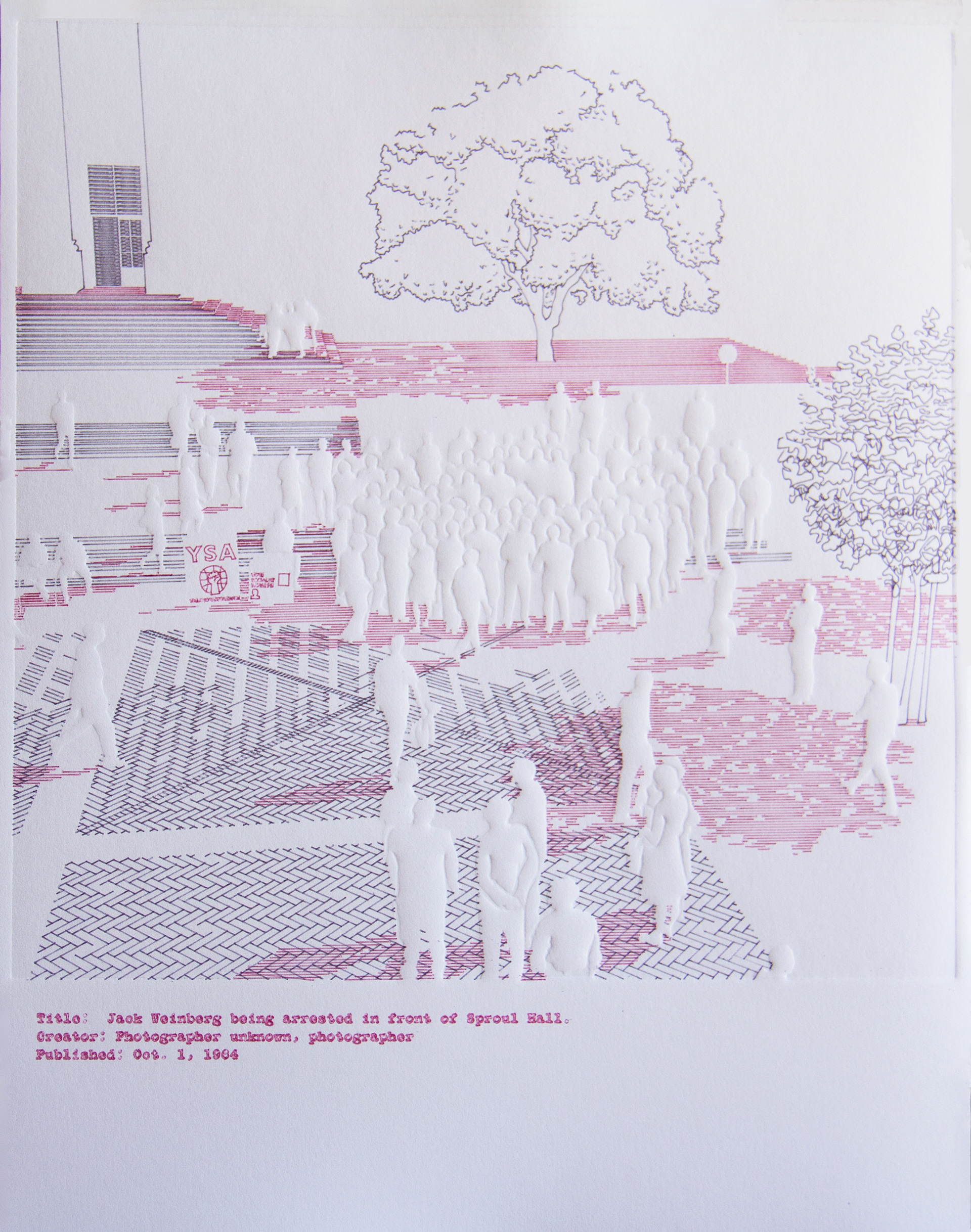
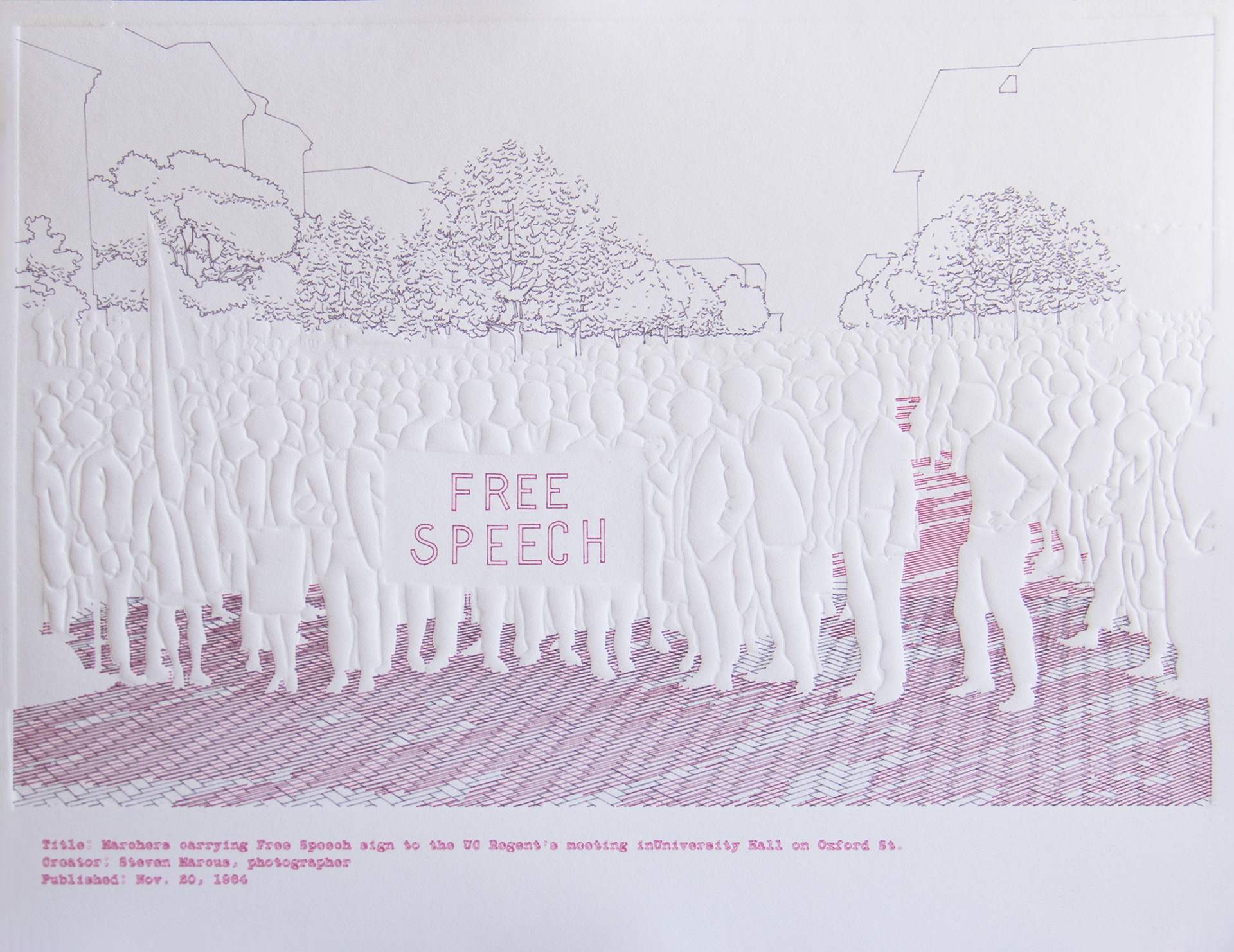
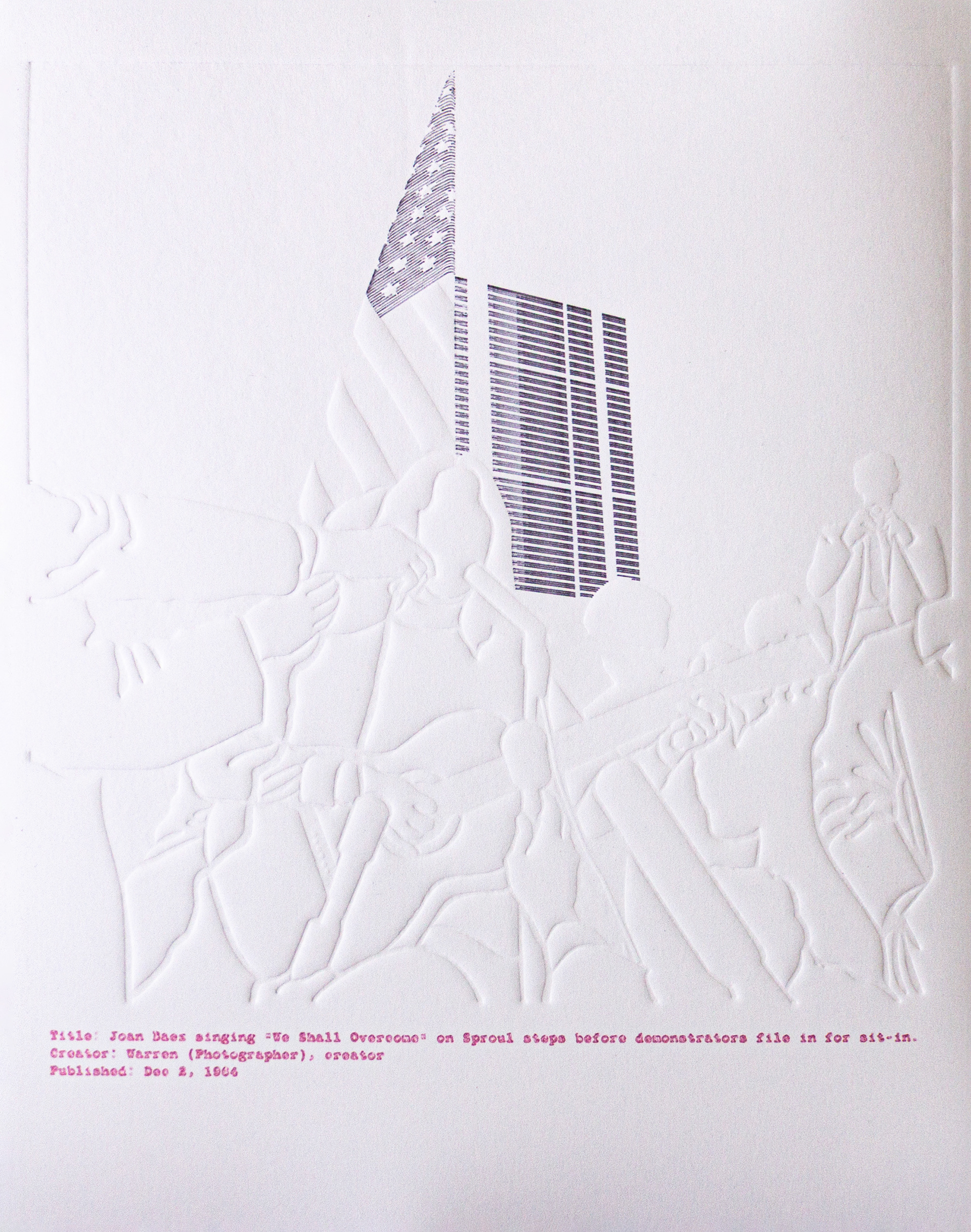
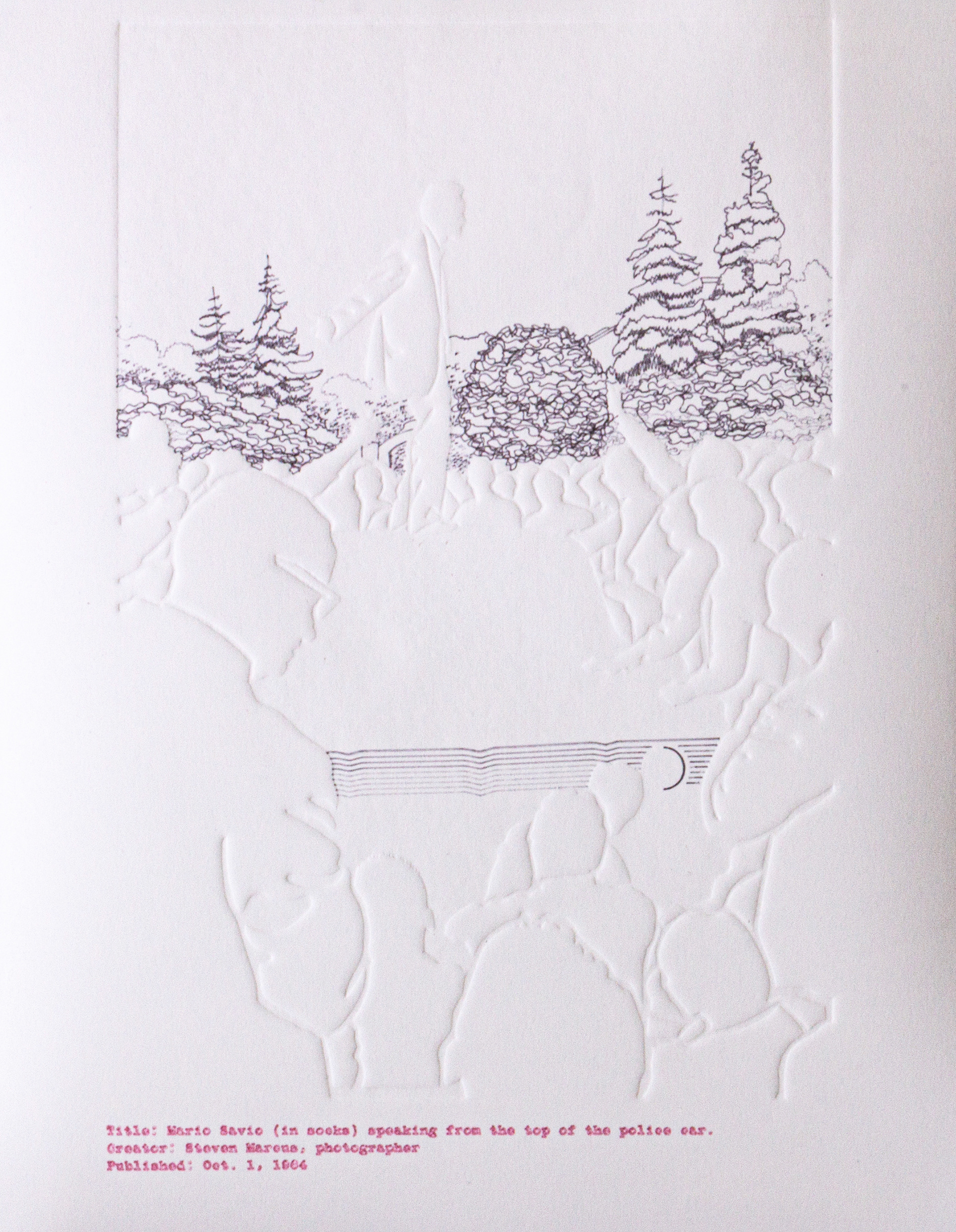
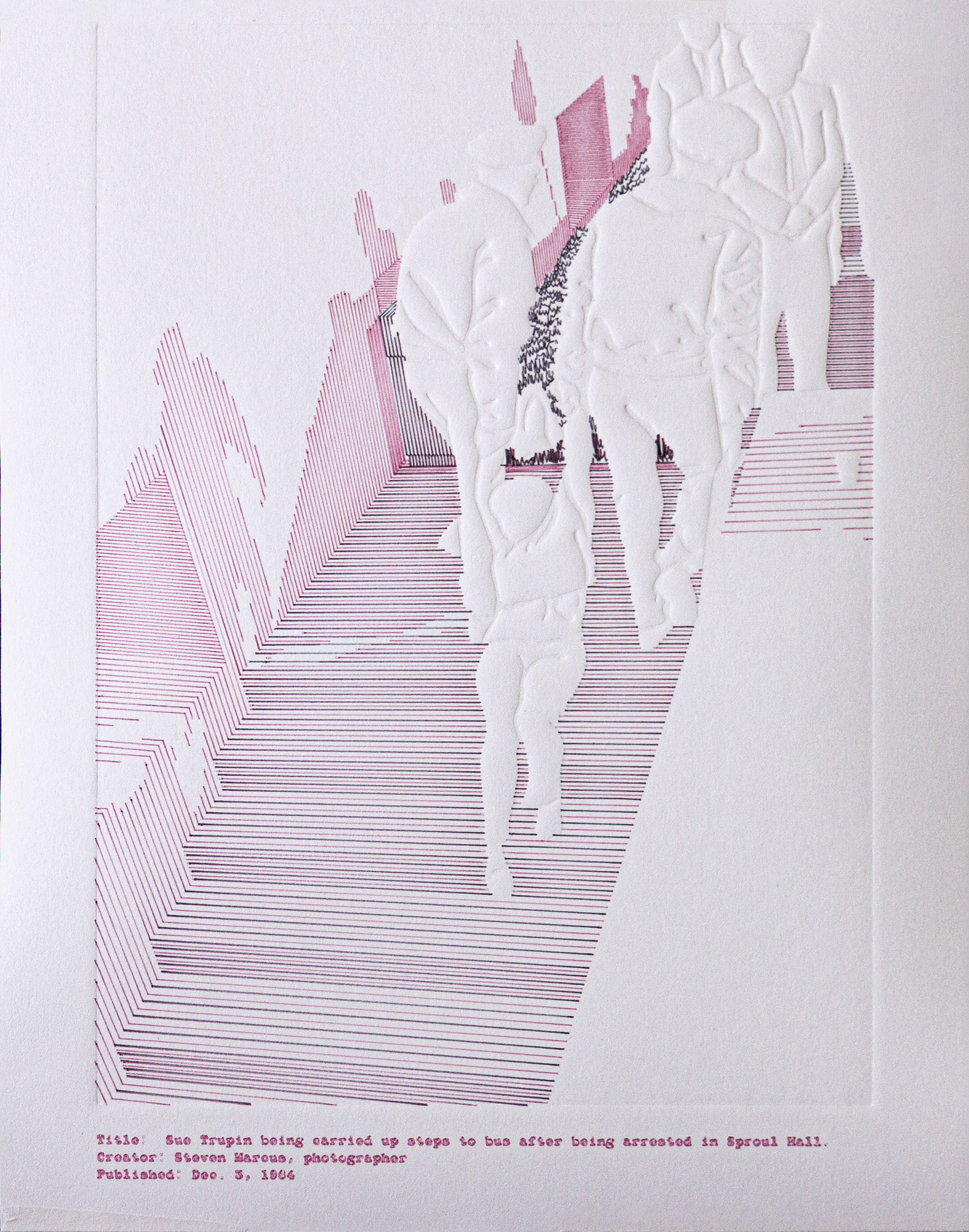
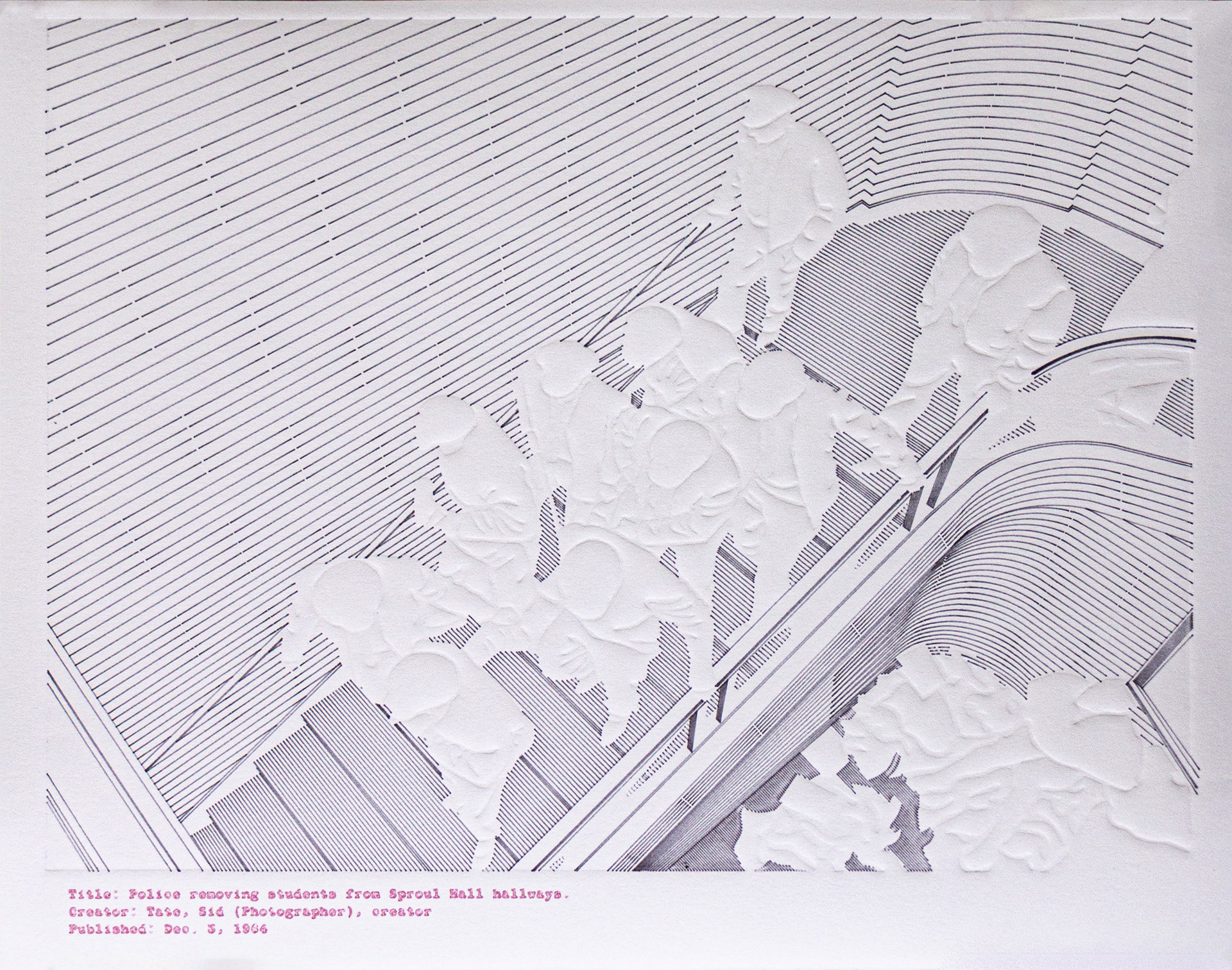
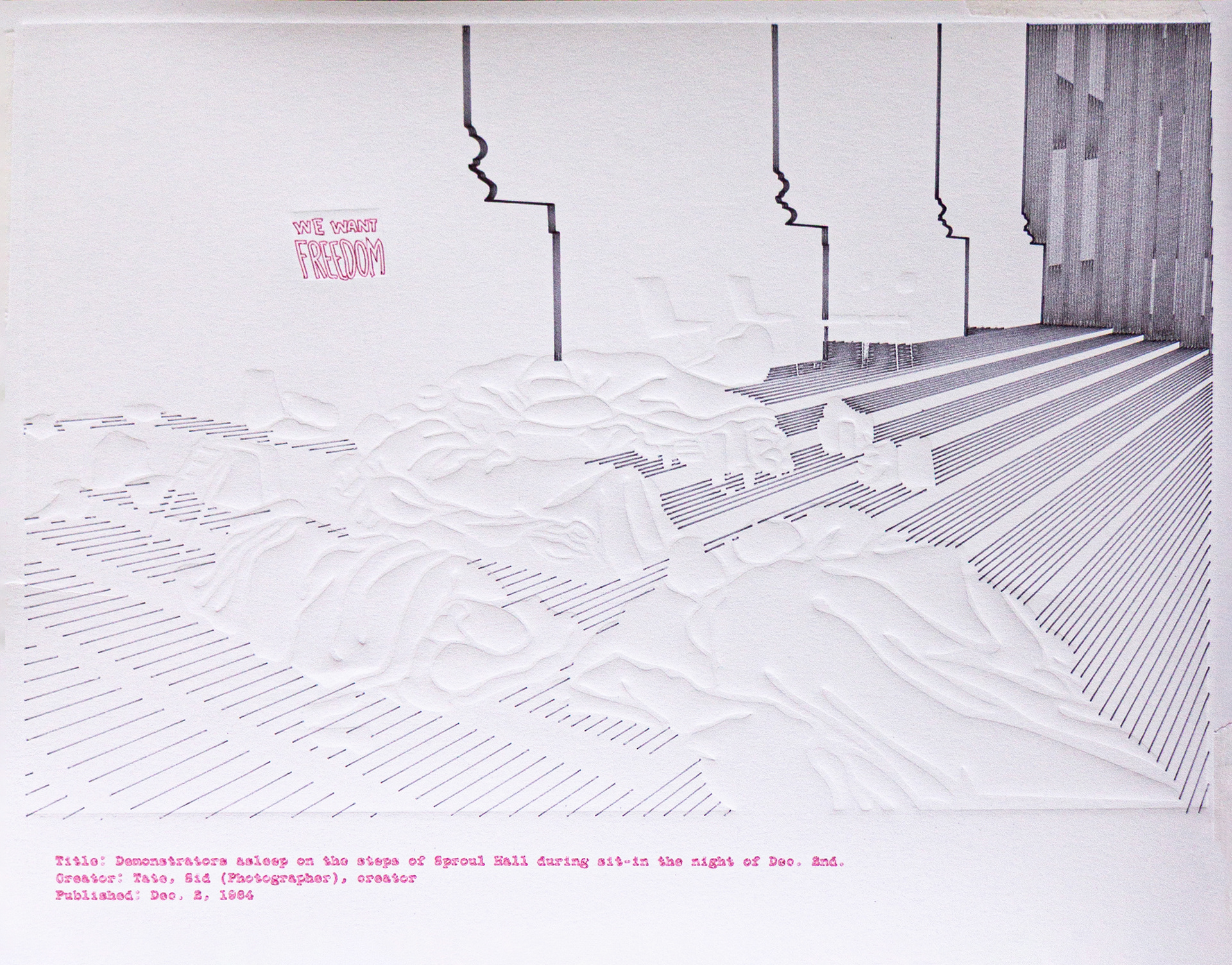
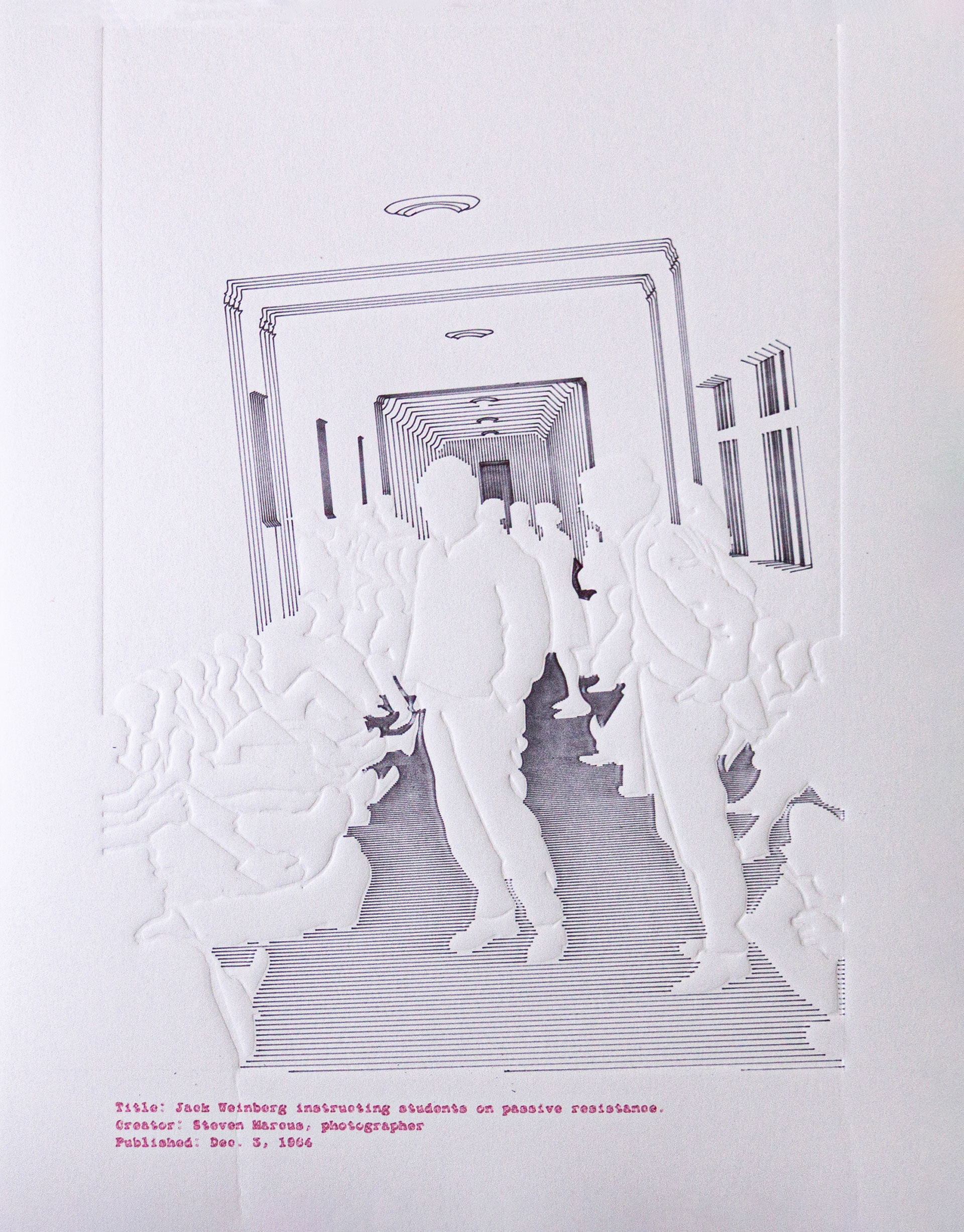
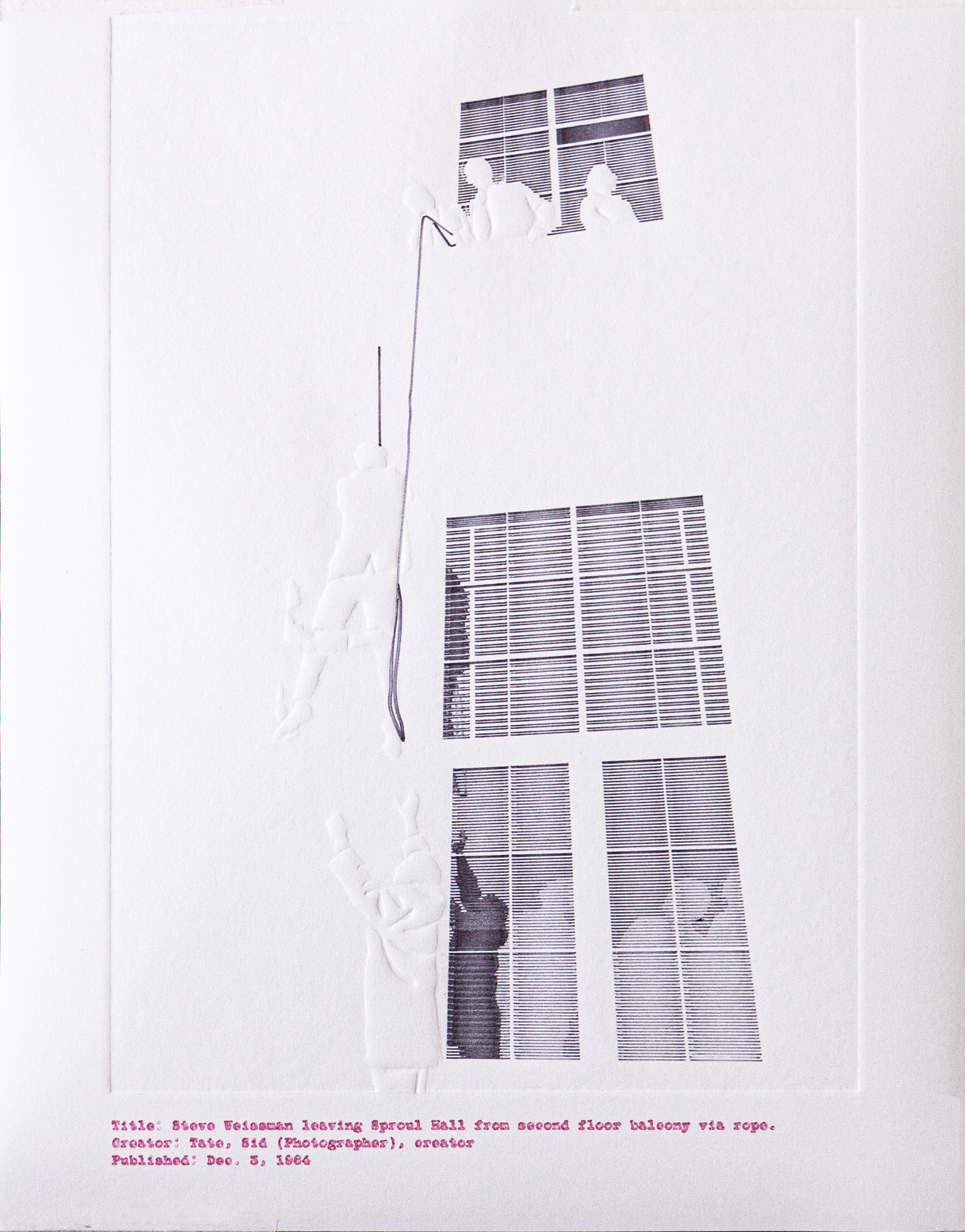
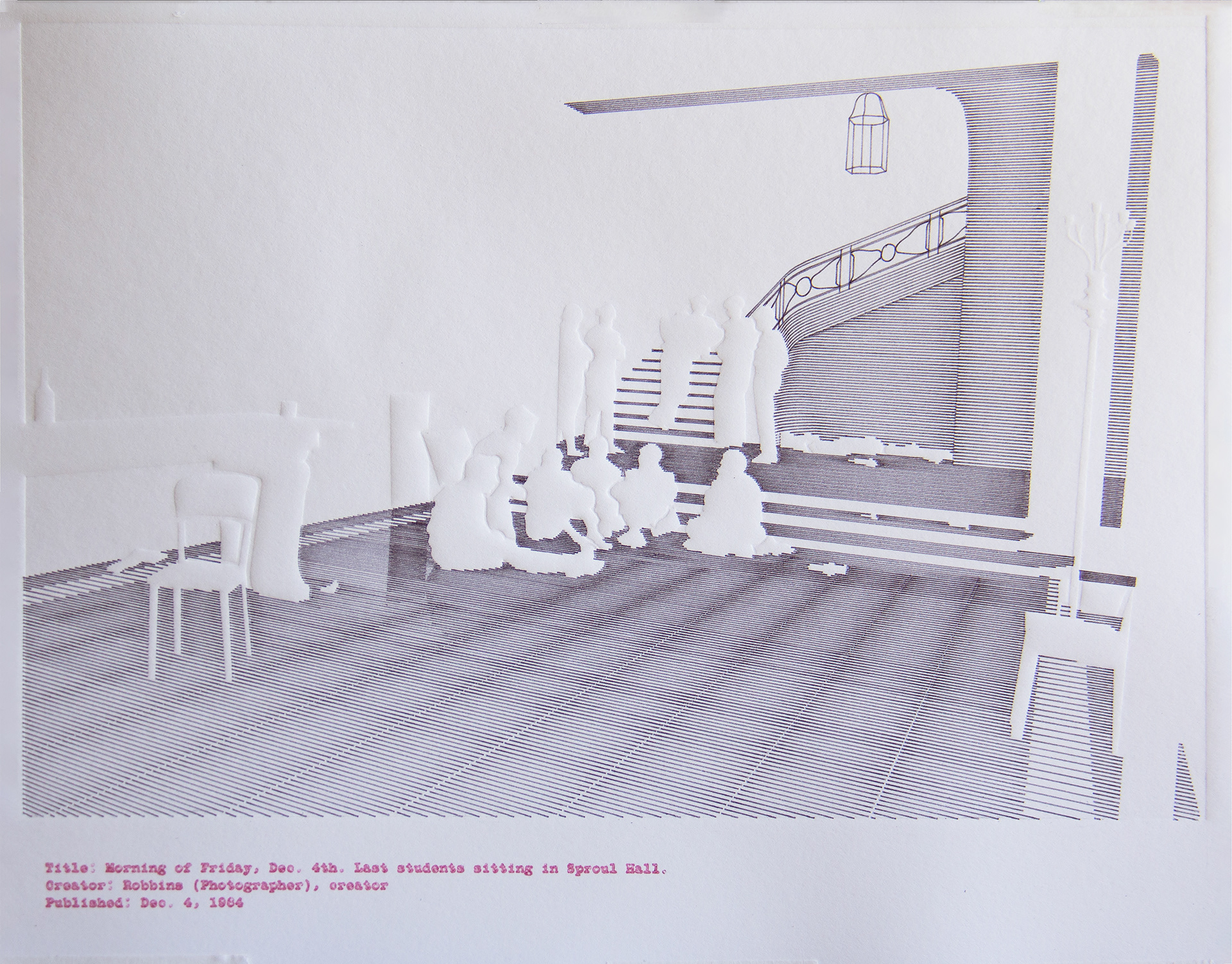
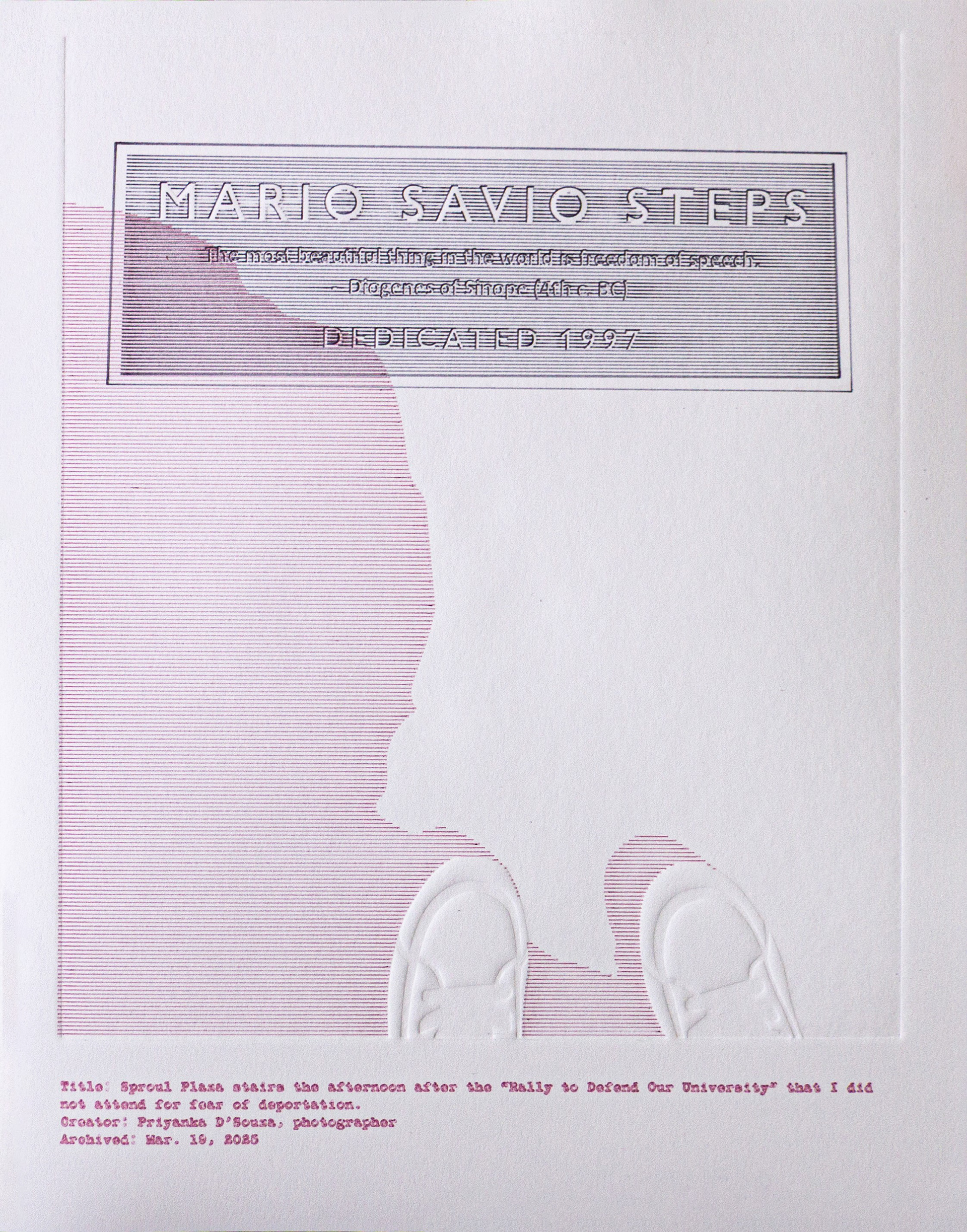
In these embossed drawings, I wanted to expand the language of South Asian folio painting that is traditionally, a very labour-intensive practice. I extensively used the Zund machine in the CED lab at UC Berkeley that, until my experiments, had only been used for architectural drawings and model-making. The CED department is known for its contribution to global design standards, and particularly the curriculum design of India’s premiere design institute, National Institute of Design (NID), Ahmedabad.
Considering Resting Museum’s work against able-bodied design standards, especially in spatial and architectural structures that deny and restrict access, the drawn elements in this set of works are built structures and trees as witnesses or agents of a historical event that many disabled people may not have had access to.
The rendering of the spaces in these works are done primarily in straight lines with reference to Nasreen Mohamadi’s drawings, considering her use of architectural drawing tools to counter her disability. As someone who lacks the dexterity to draw with rulers myself, I see the Zund machine as the technological successor to Nasreen’s draughters.
Considering Resting Museum’s work against able-bodied design standards, especially in spatial and architectural structures that deny and restrict access, the drawn elements in this set of works are built structures and trees as witnesses or agents of a historical event that many disabled people may not have had access to.
The rendering of the spaces in these works are done primarily in straight lines with reference to Nasreen Mohamadi’s drawings, considering her use of architectural drawing tools to counter her disability. As someone who lacks the dexterity to draw with rulers myself, I see the Zund machine as the technological successor to Nasreen’s draughters.