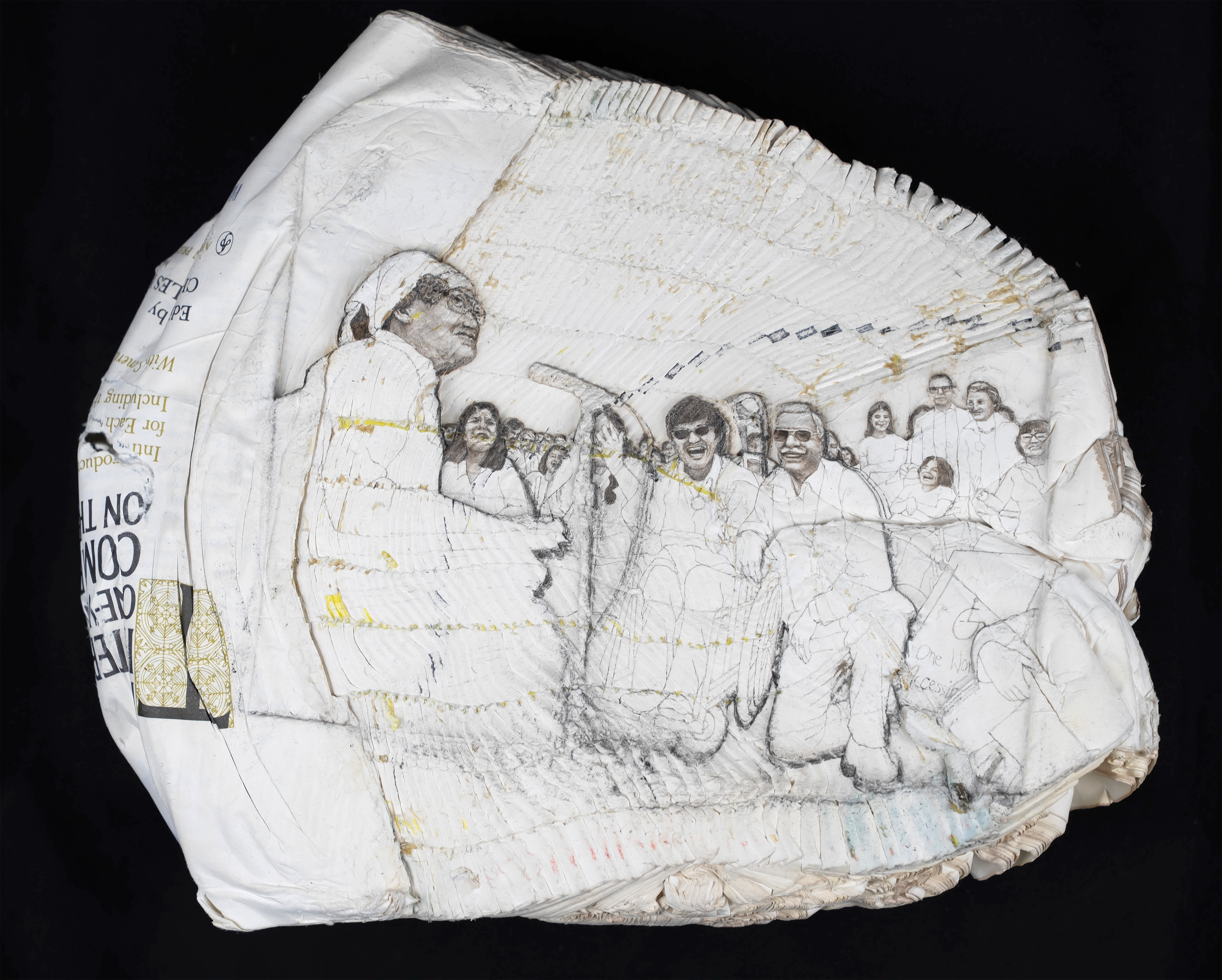
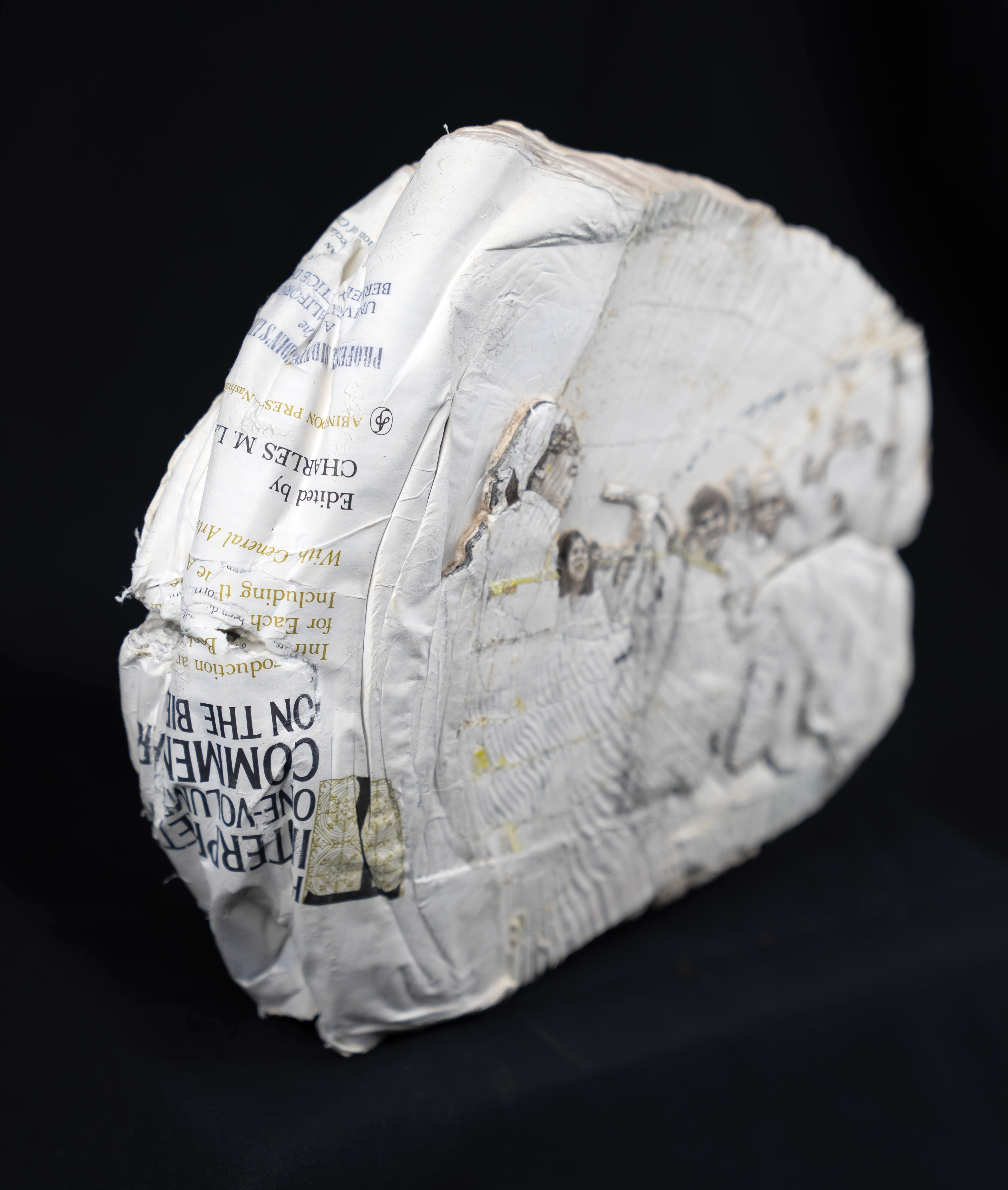
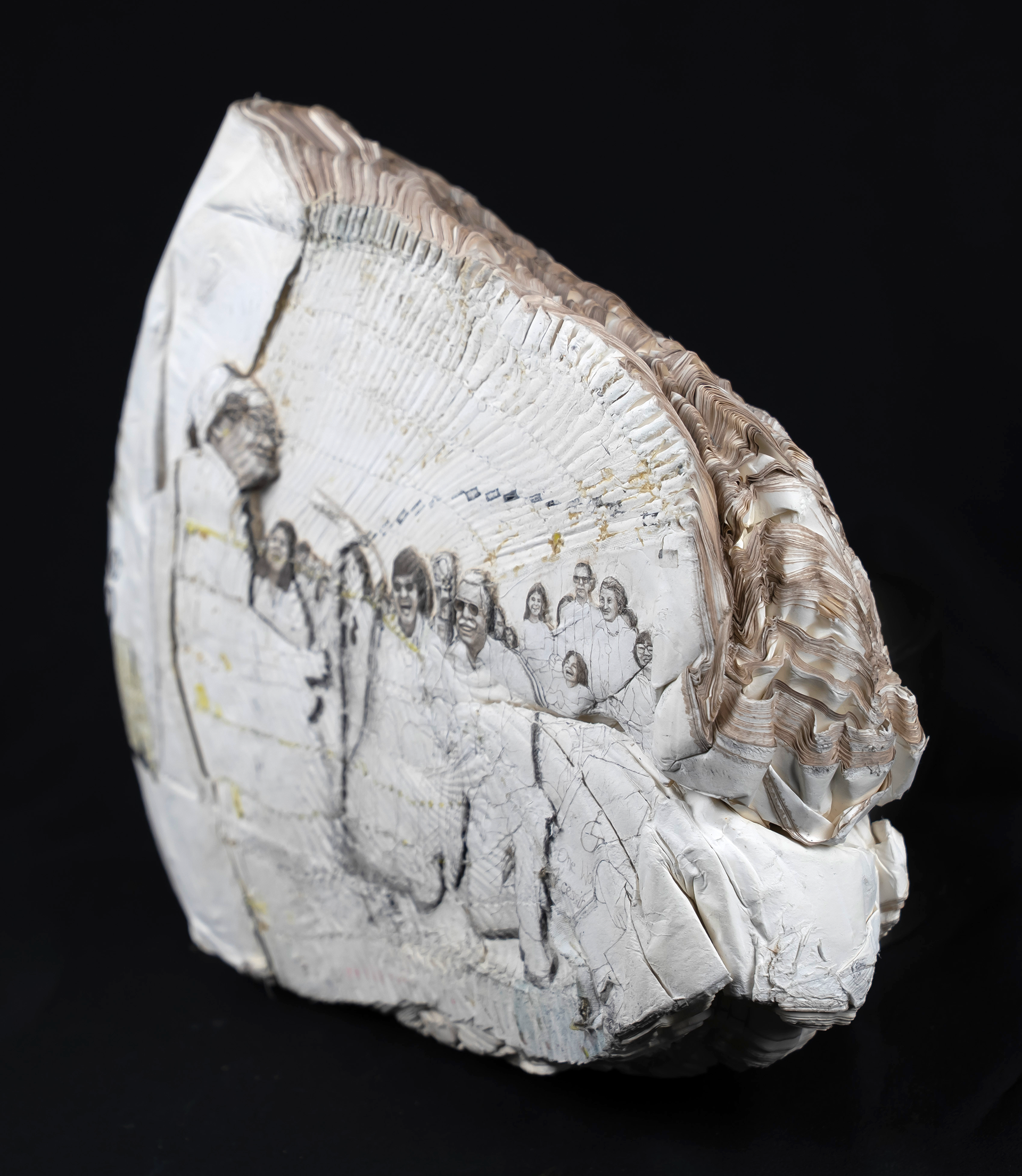
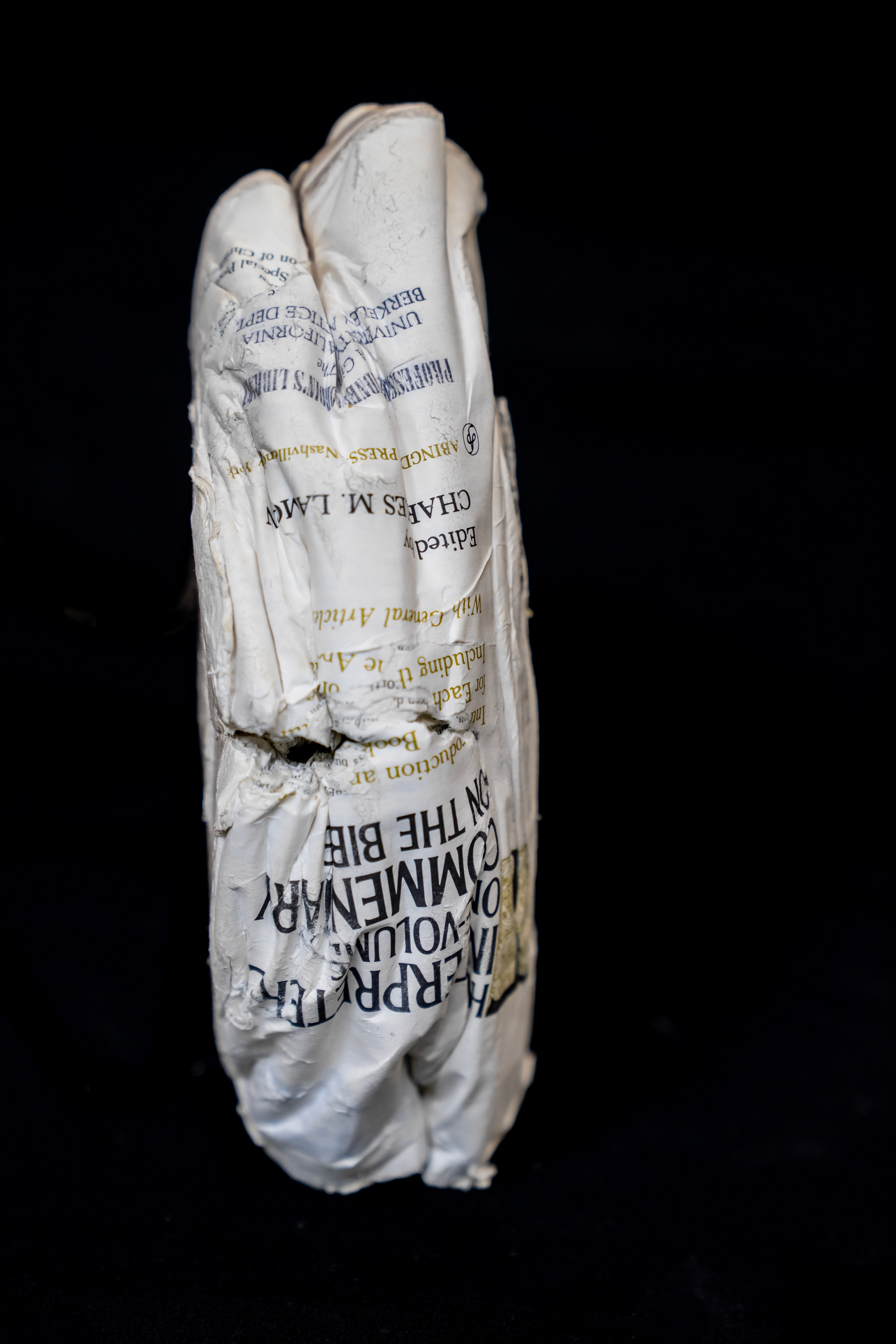
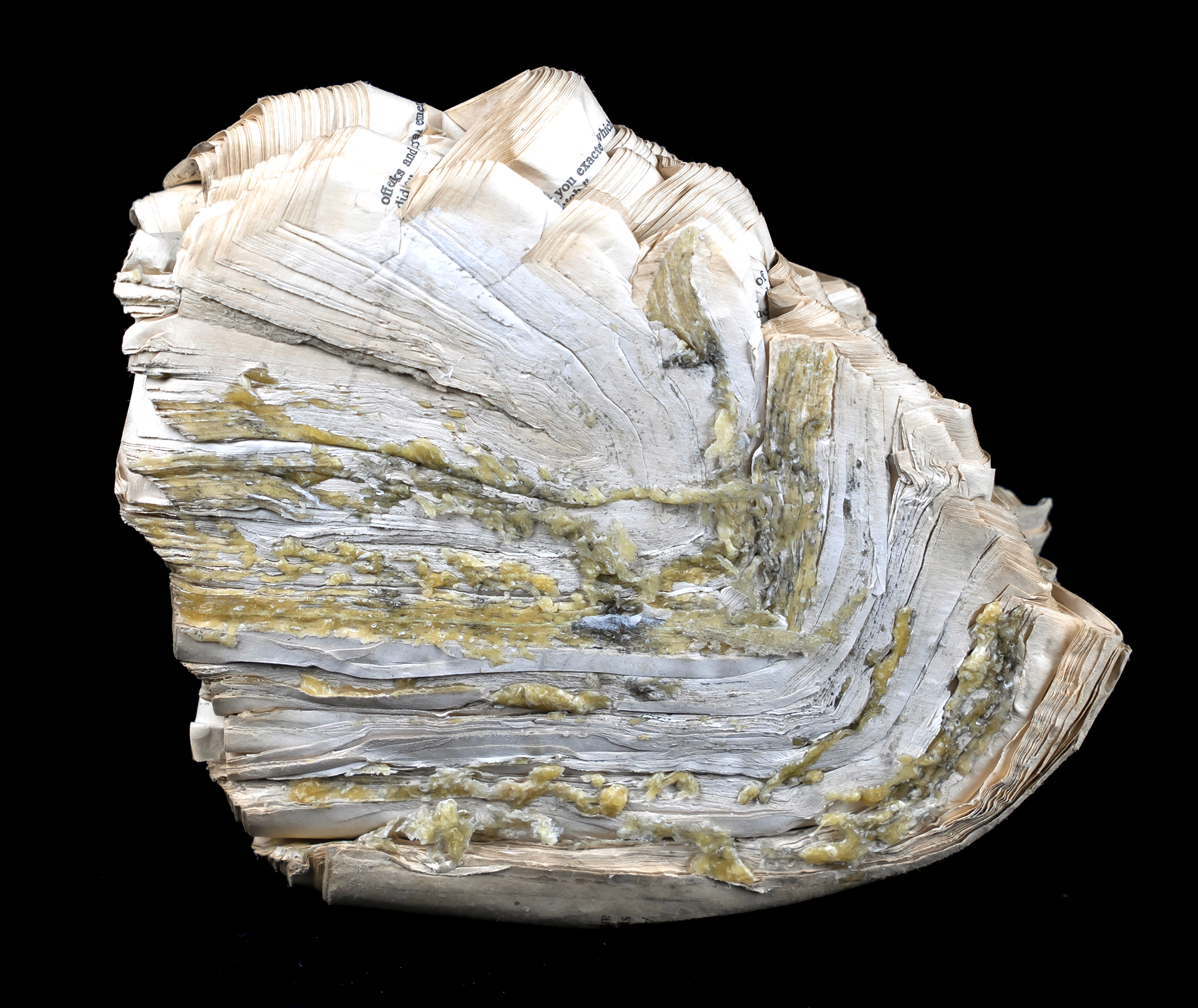
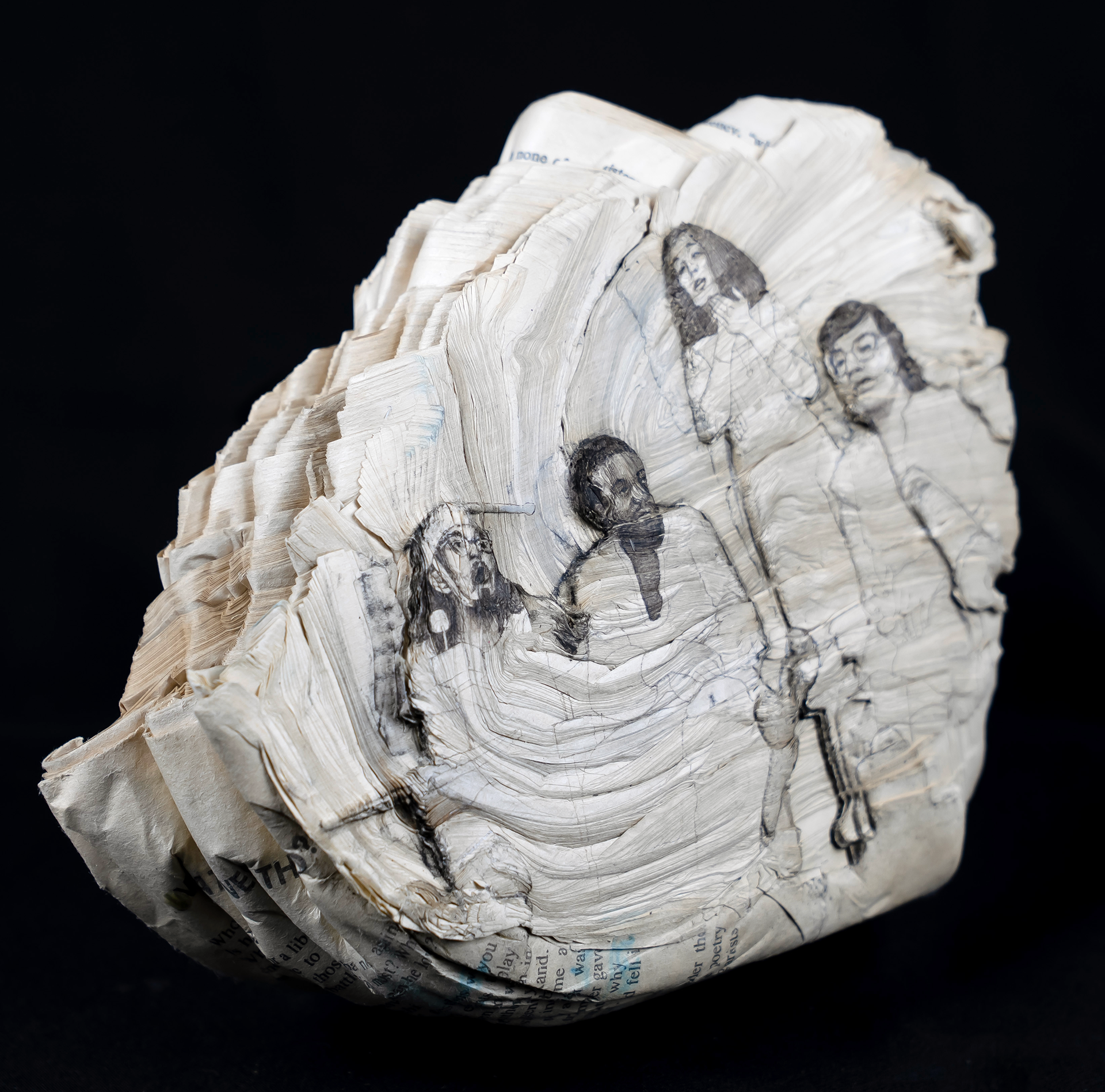
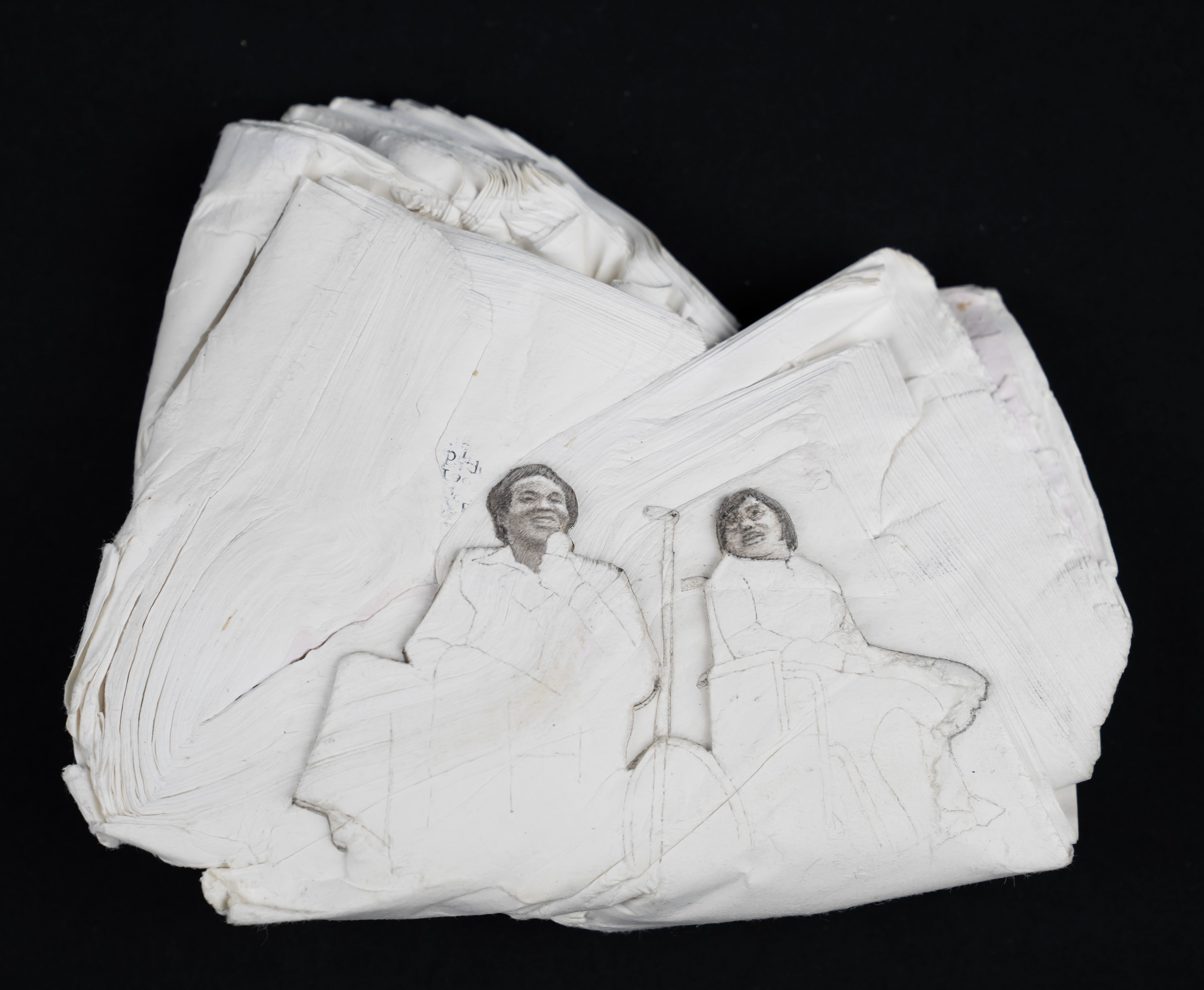
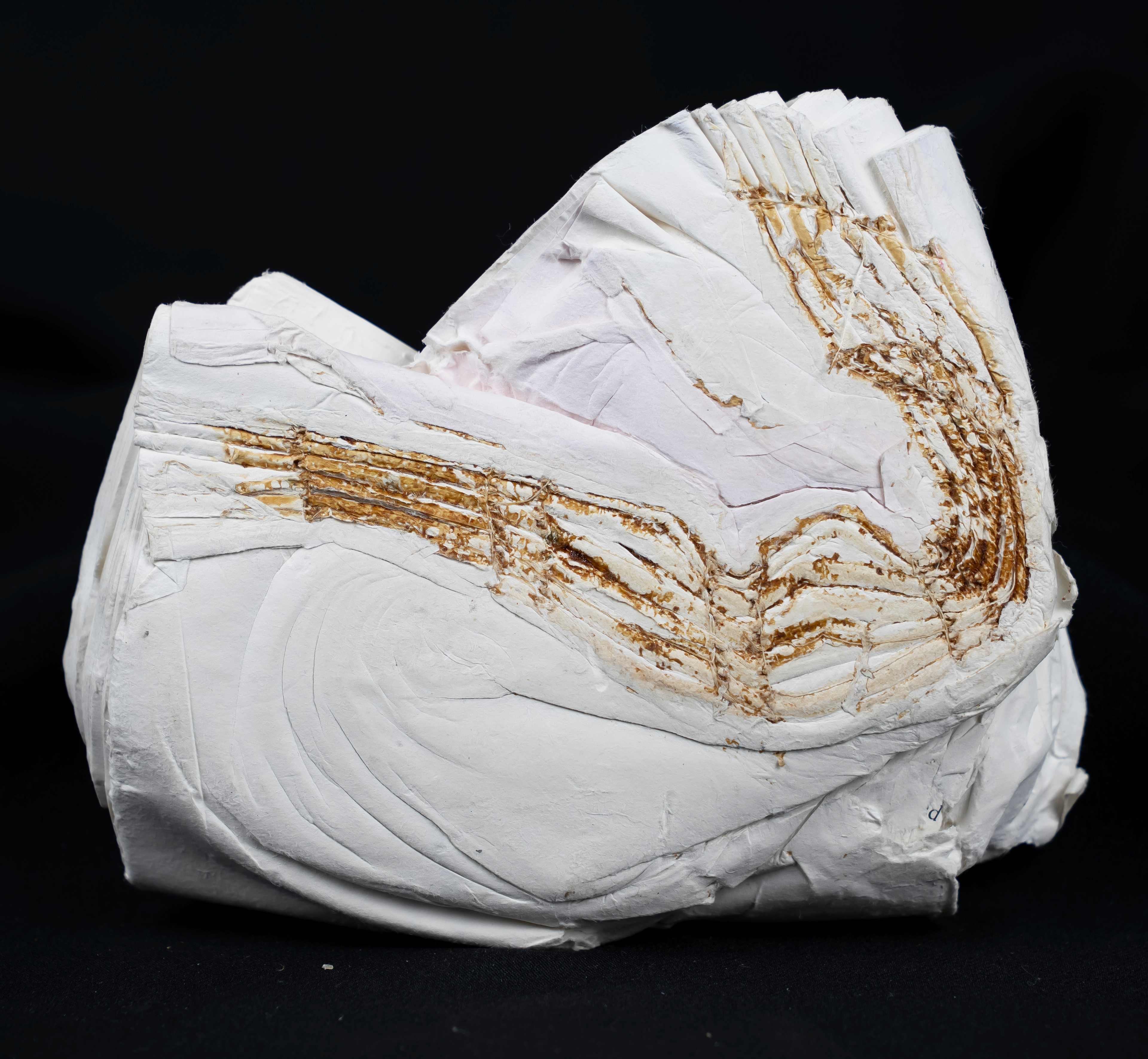
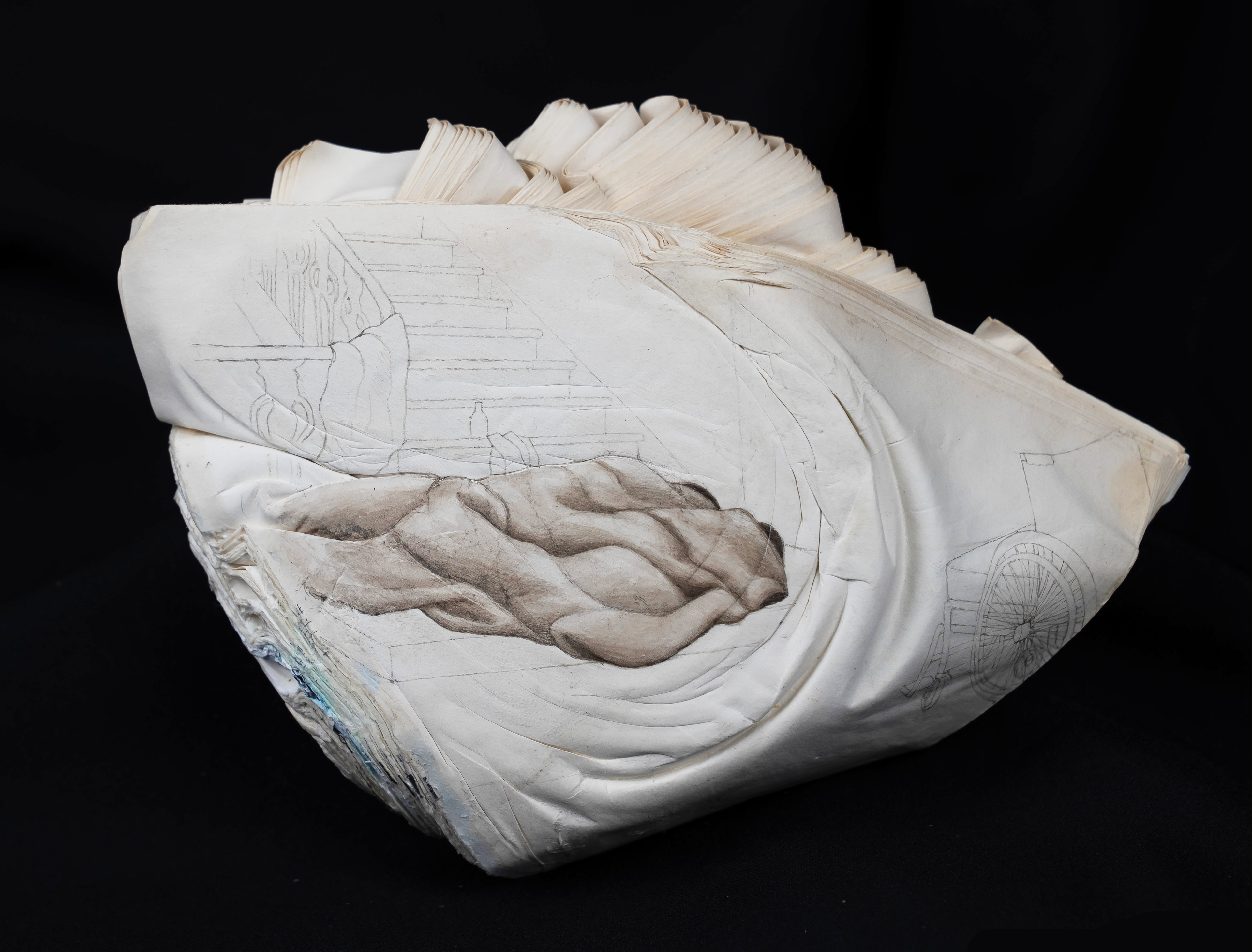
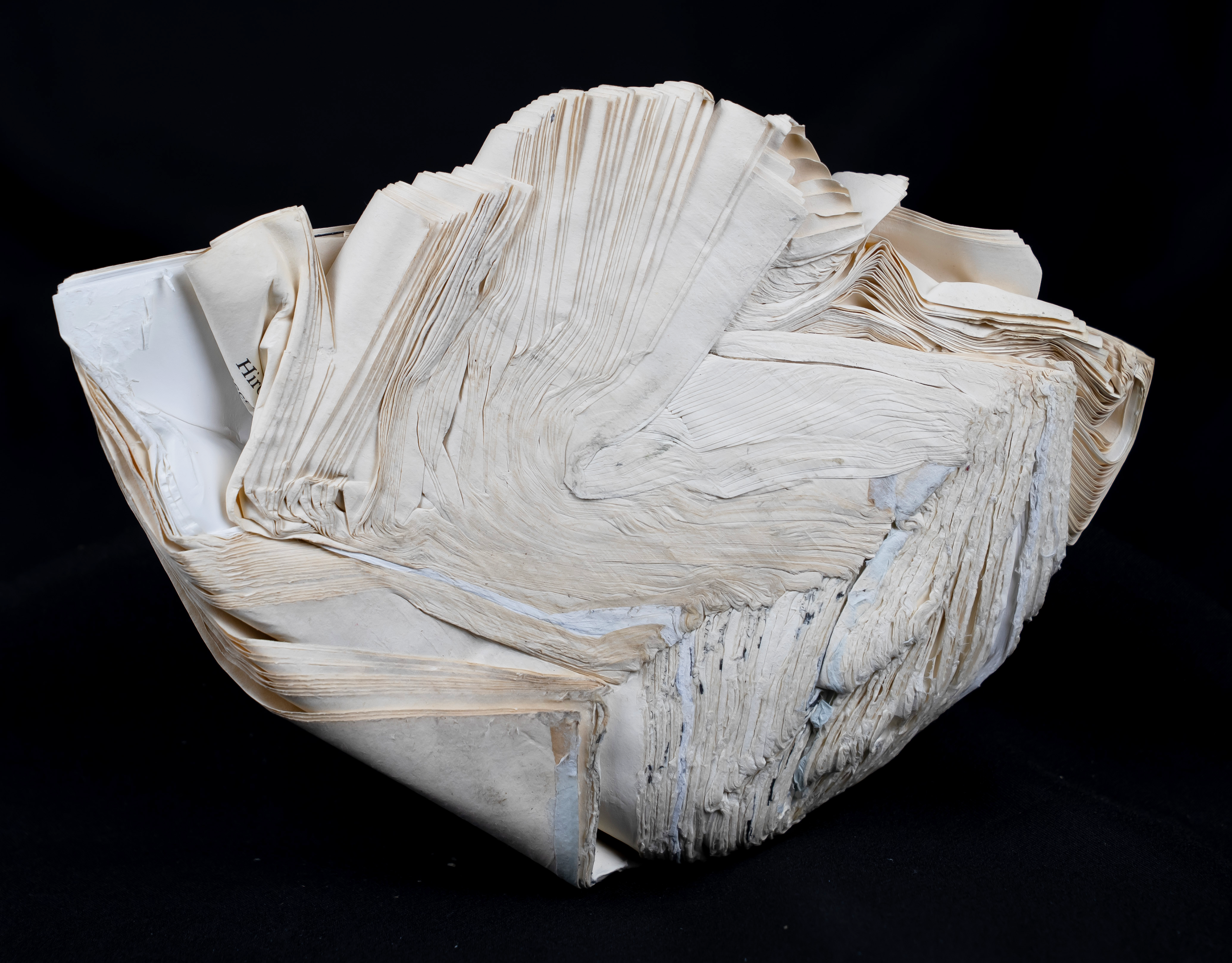
I emboss figures of the activists, drawn from archival photographs, into discarded library books sourced from the Bay Area using a machine used to test the strength of concrete. The extreme mechanical pressure enacts the systemic oppression these activists and disabled people routinely endure.
The embossed figures are then painted in the tradition of South Asian miniature painting, which lends the work its title. Miniature painting is traditionally executed on wasli—paper pasted together in layers for durability—a word derived from the Urdu wasl, meaning "join" or "union," resonant with political solidarity, collective care, and interdependent disabled life. The English word, muscle, meaning "strength", sounds like the Hindi masal, "to crush"—naming both the force applied to these books and political protests.
By substituting machine-compressed books for the hand-layered wasli surface, I resist the romanticization of labor the tradition often demands. The resulting objects appear wood-like and resemble an archaeological artifact, invoking crip and queer time as deep time: slow, sedimentary, and enduring.
Learn more about the 504 sit-in at https://longmoreinstitute.sfsu.edu/patient-no-more/virtual-tour
1. Title: Wasl Muscle: Organizer Kitty Cone addresses the Victory rally on April 30 in SF. (San Francisco Examiner Archive)
Medium: Watercolor on discarded book from UC Berkeley Library, ‘Interpreters One-Volume Commentary on the Bible’, compressed-embossed under 43k lbs.
Size: 9.25” x 11” x 2.75”
Medium: Watercolor on discarded book from UC Berkeley Library, ‘Interpreters One-Volume Commentary on the Bible’, compressed-embossed under 43k lbs.
Size: 9.25” x 11” x 2.75”
Kitty Cone was a disabled, lesbian activist and one of the lead organizers of the 504 sit-in.
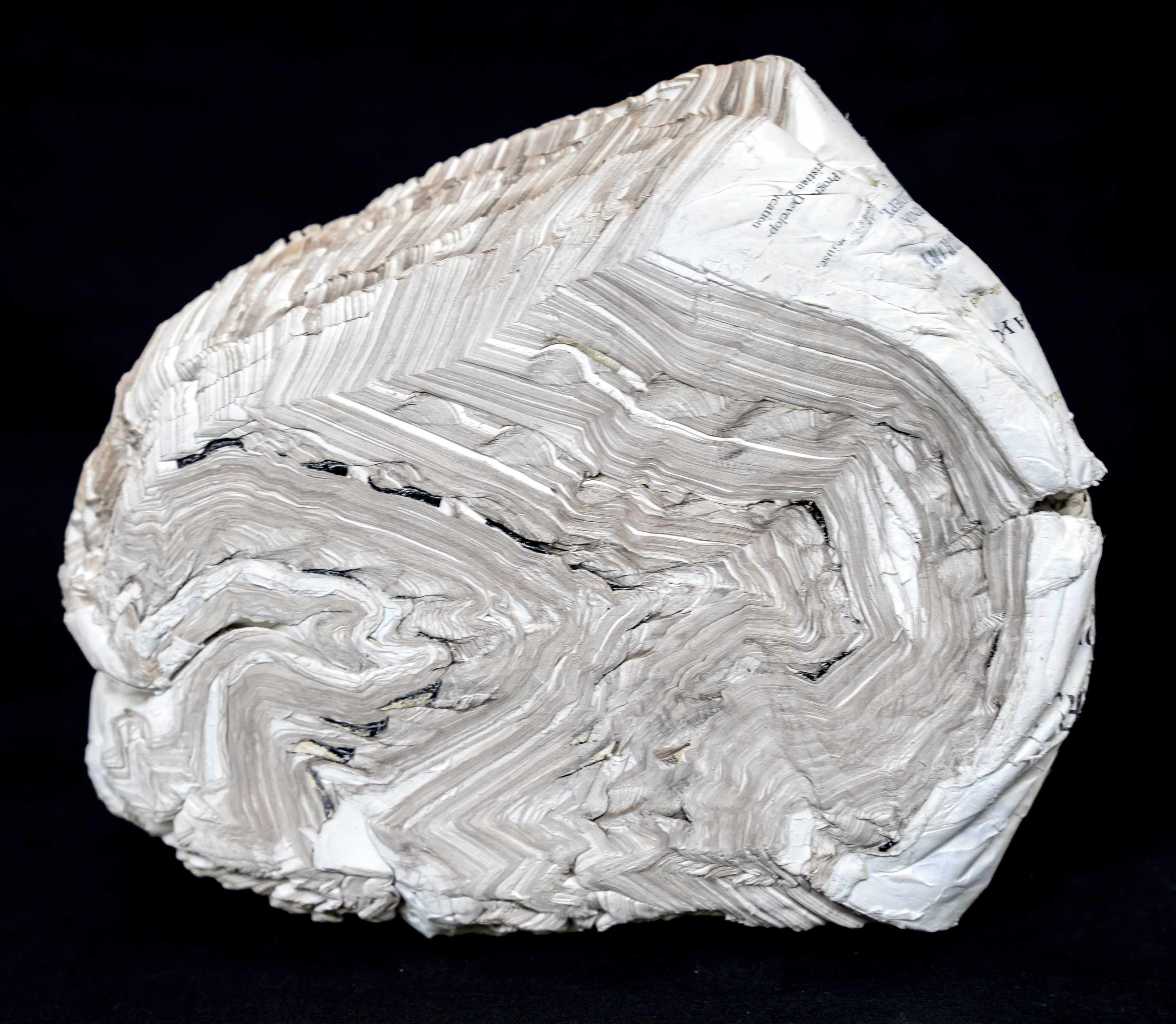
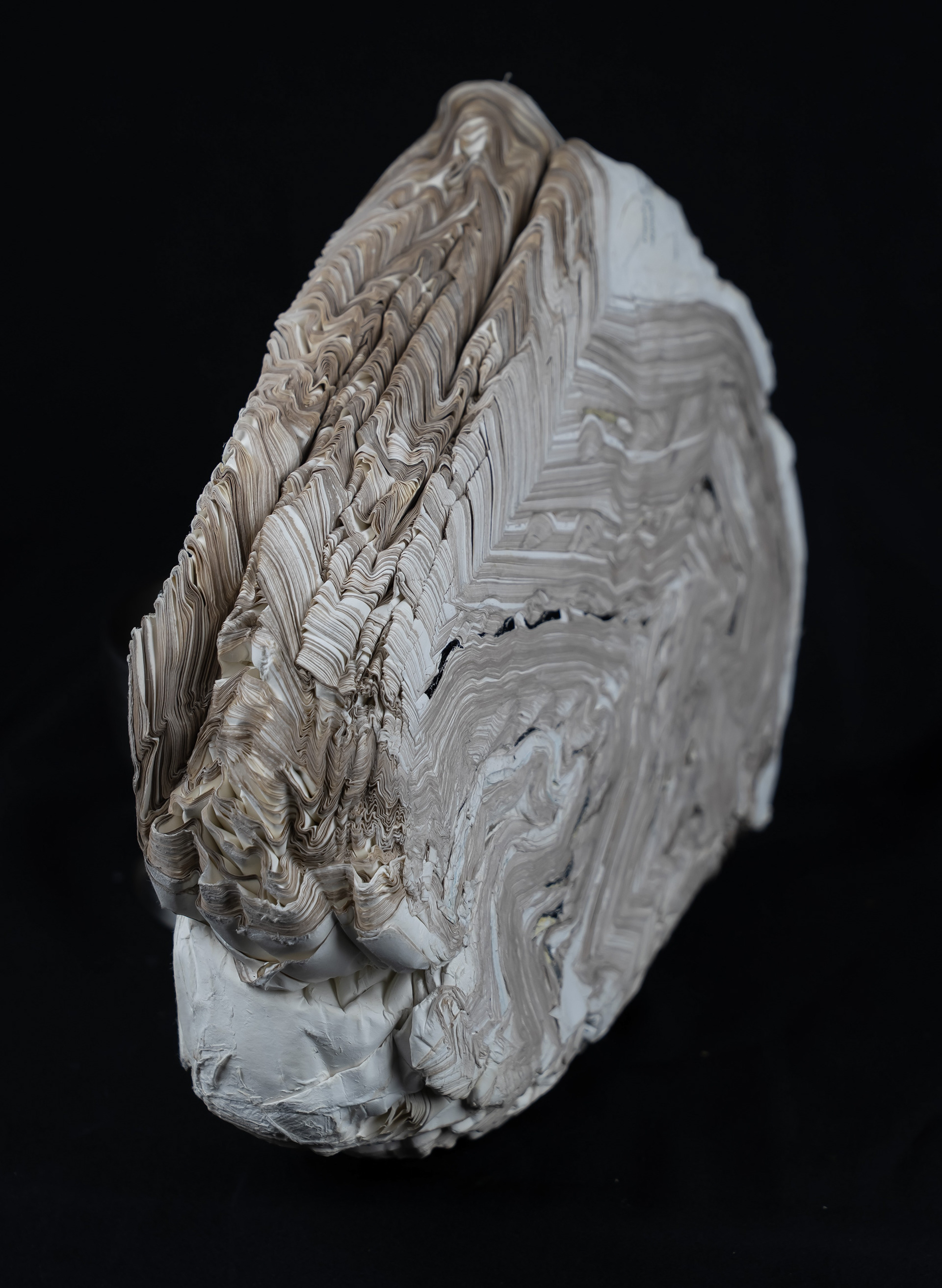
2. Title: Wasl Muscle: Hale Zukas, Ron Washington, and Judy Heumann respond to a question at a press conference held at the San Francisco airport before protesters leave for Washington. Lynette Taylor provides American Sign Language interpretation. (San Francisco Examiner Archive)
Medium: Discarded book from SF, ‘Atlas Shrugged', compressed under 40k lbs.
Size: 6.25” x 8” x 2.25”
Medium: Discarded book from SF, ‘Atlas Shrugged', compressed under 40k lbs.
Size: 6.25” x 8” x 2.25”
A Press Committee issued daily briefings for journalists from around the world. Soon accounts of people with disabilities demanding their civil rights replaced inspirational stories of individuals overcoming adversity.
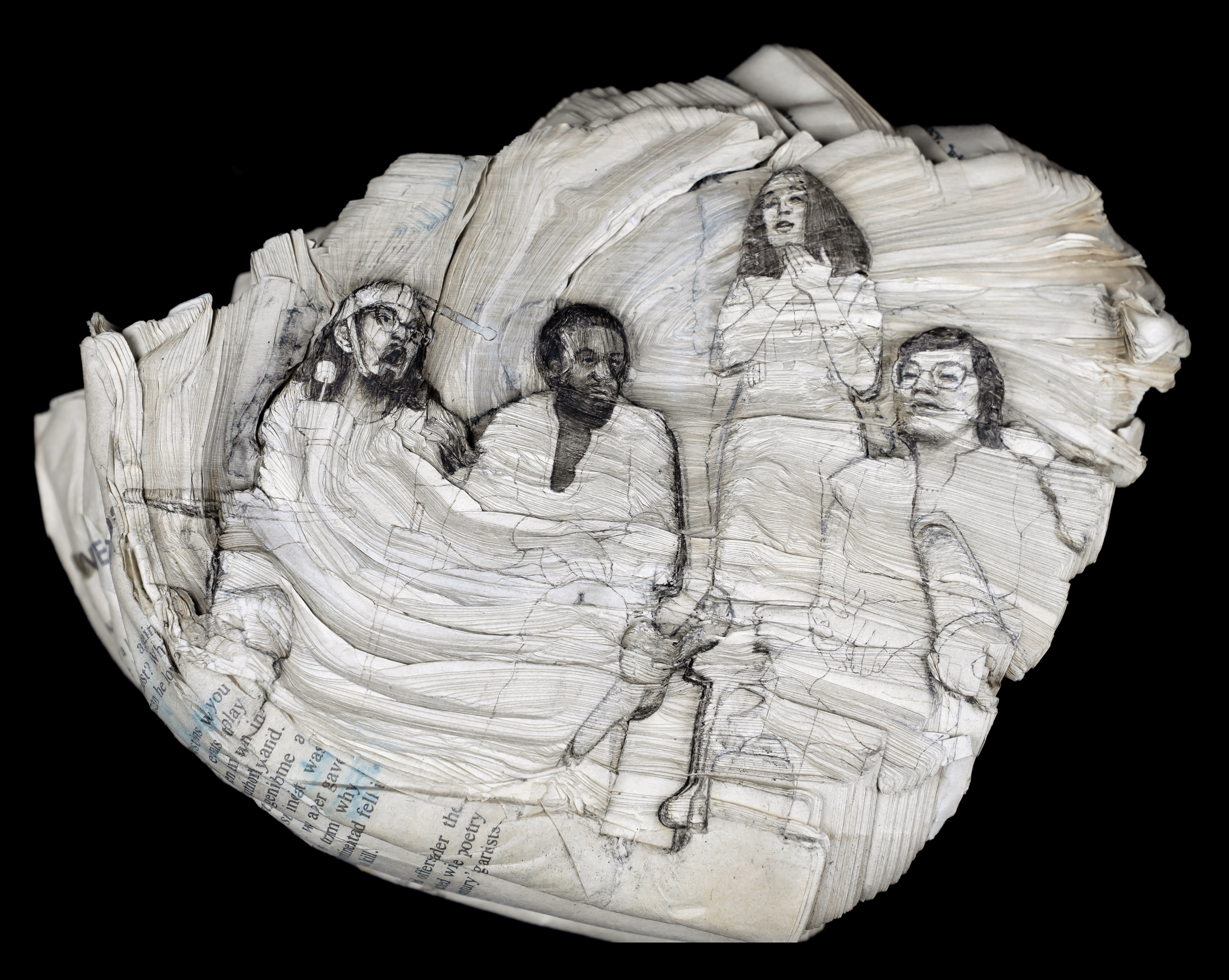
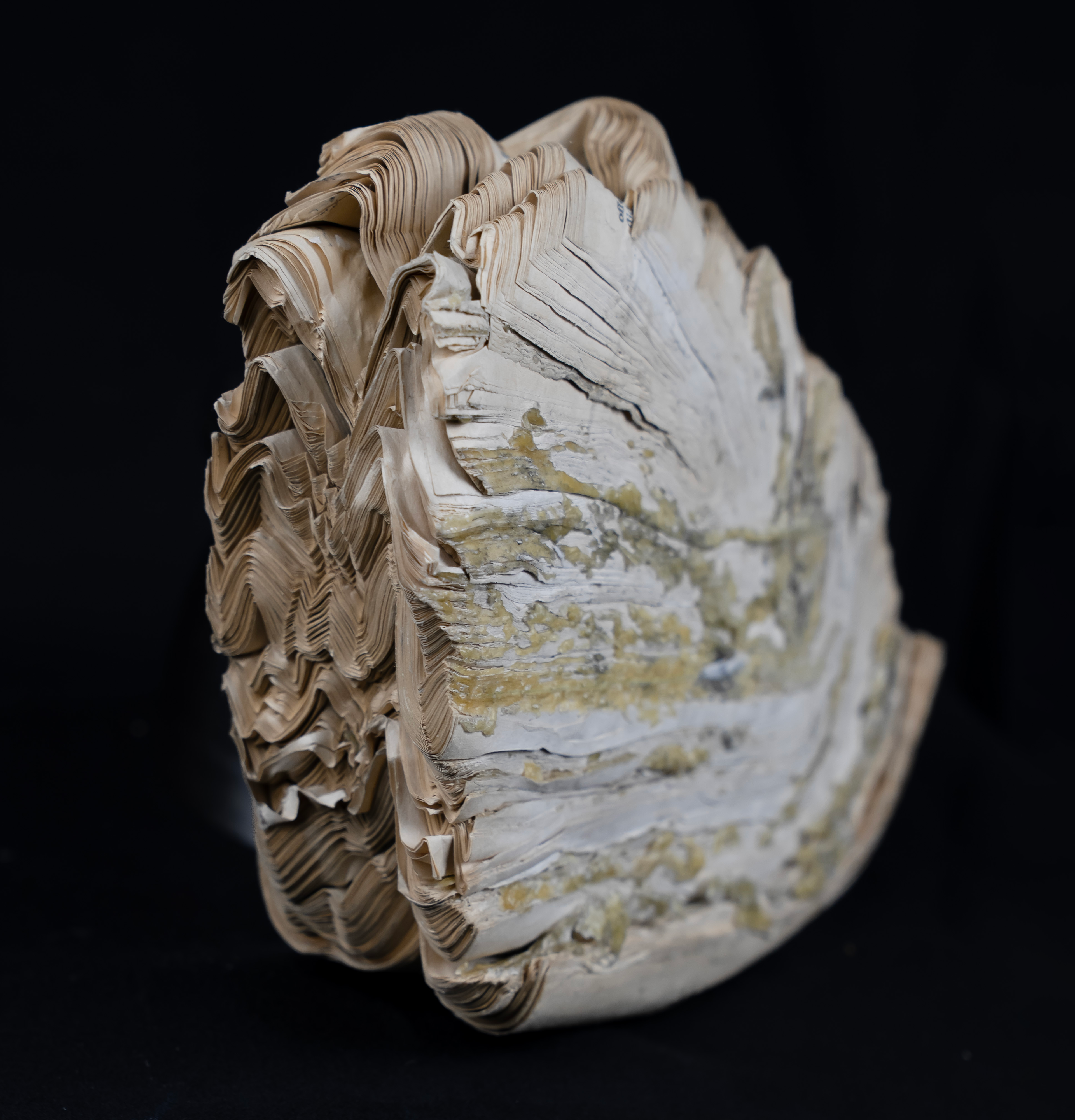
3. Title: Wasl Muscle: Black Panther Party member Bradley Lomax and organizer Judy Heumann at the rally in Lafayette park in Washington. (Photograph by HolLynn D'Lil)
Medium: Watercolour on discarded book from UC Berkeley Library, ‘Metaphors from Life’, compress-embossed under 25k lbs.
Size: 6.25” x 8” x 2.25”
Medium: Watercolour on discarded book from UC Berkeley Library, ‘Metaphors from Life’, compress-embossed under 25k lbs.
Size: 6.25” x 8” x 2.25”
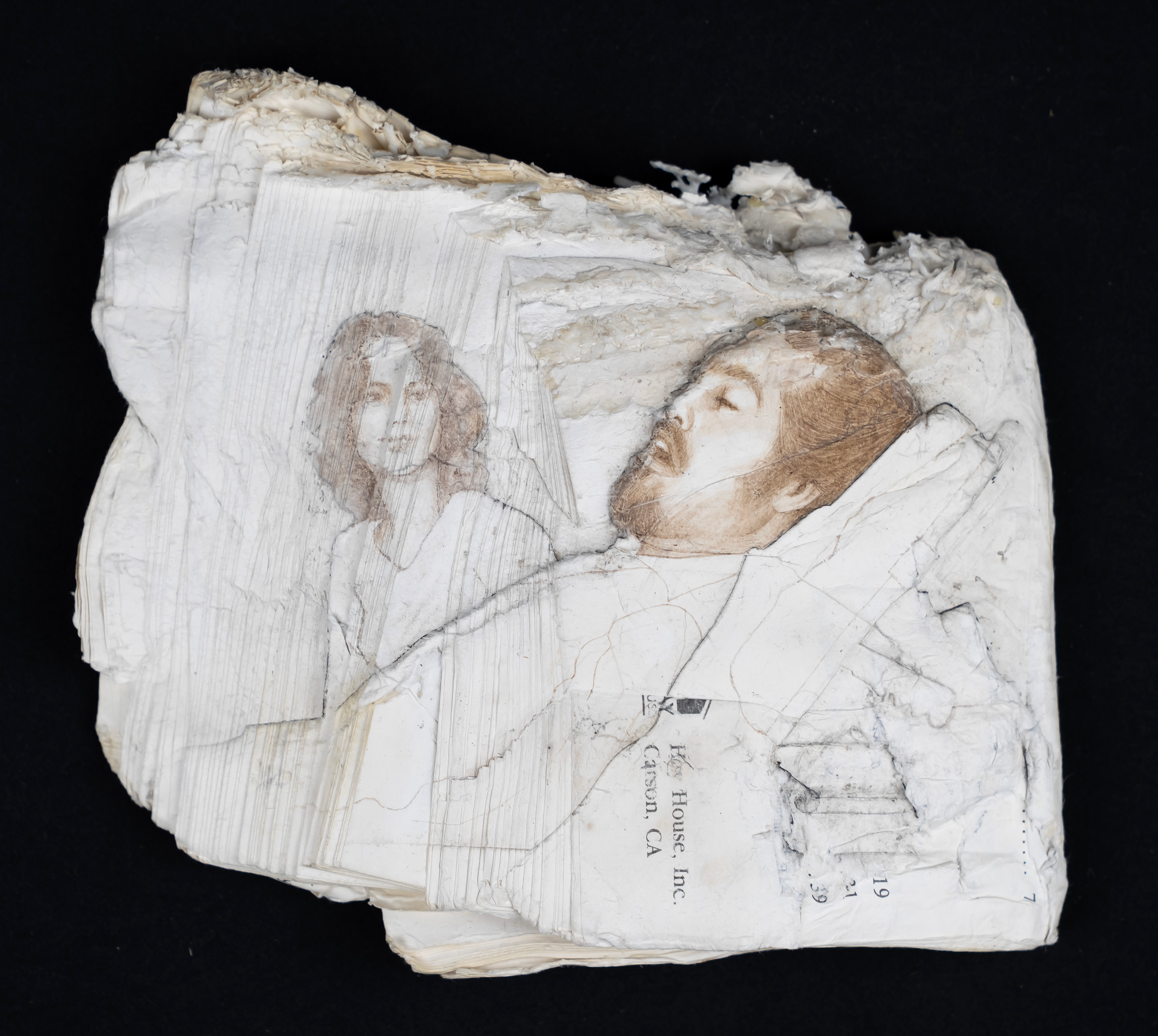
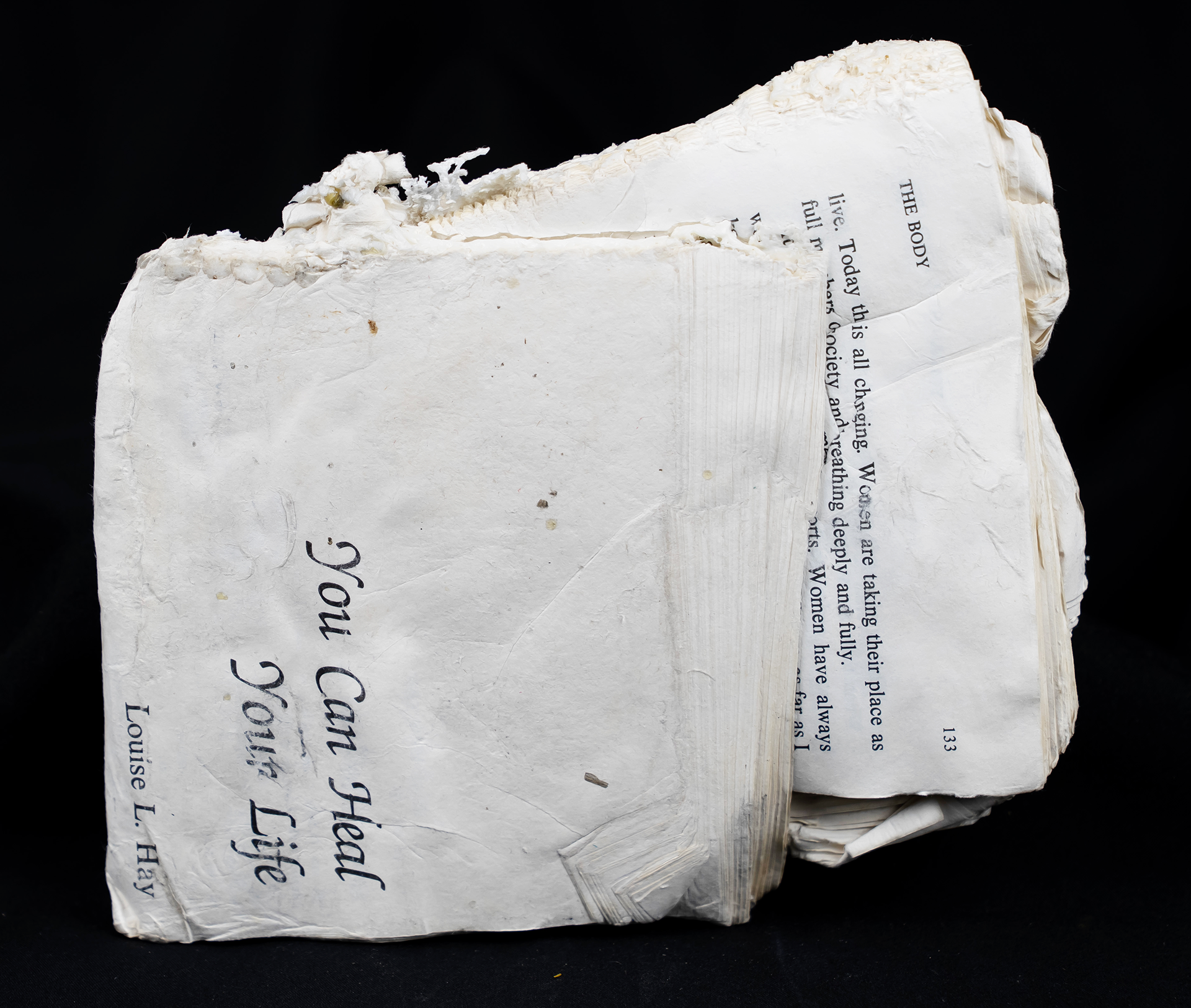
4. Title: Wasl Muscle: Ed Roberts, with wife Cathy speaking at the federal hearing inside the protest at the Federal Building on Friday 16th April 1977. (Photograph by HolLynn D'Lil)
Medium: Watercolor on discarded book from SF, ‘You can heal your life', compress-embossed under 45k lbs.
Size: 7” x 8” x 2”
Medium: Watercolor on discarded book from SF, ‘You can heal your life', compress-embossed under 45k lbs.
Size: 7” x 8” x 2”
Ed Roberts was the first wheelchair user to attend UC Berkeley. He was vital to the Independent Living movement in the US.
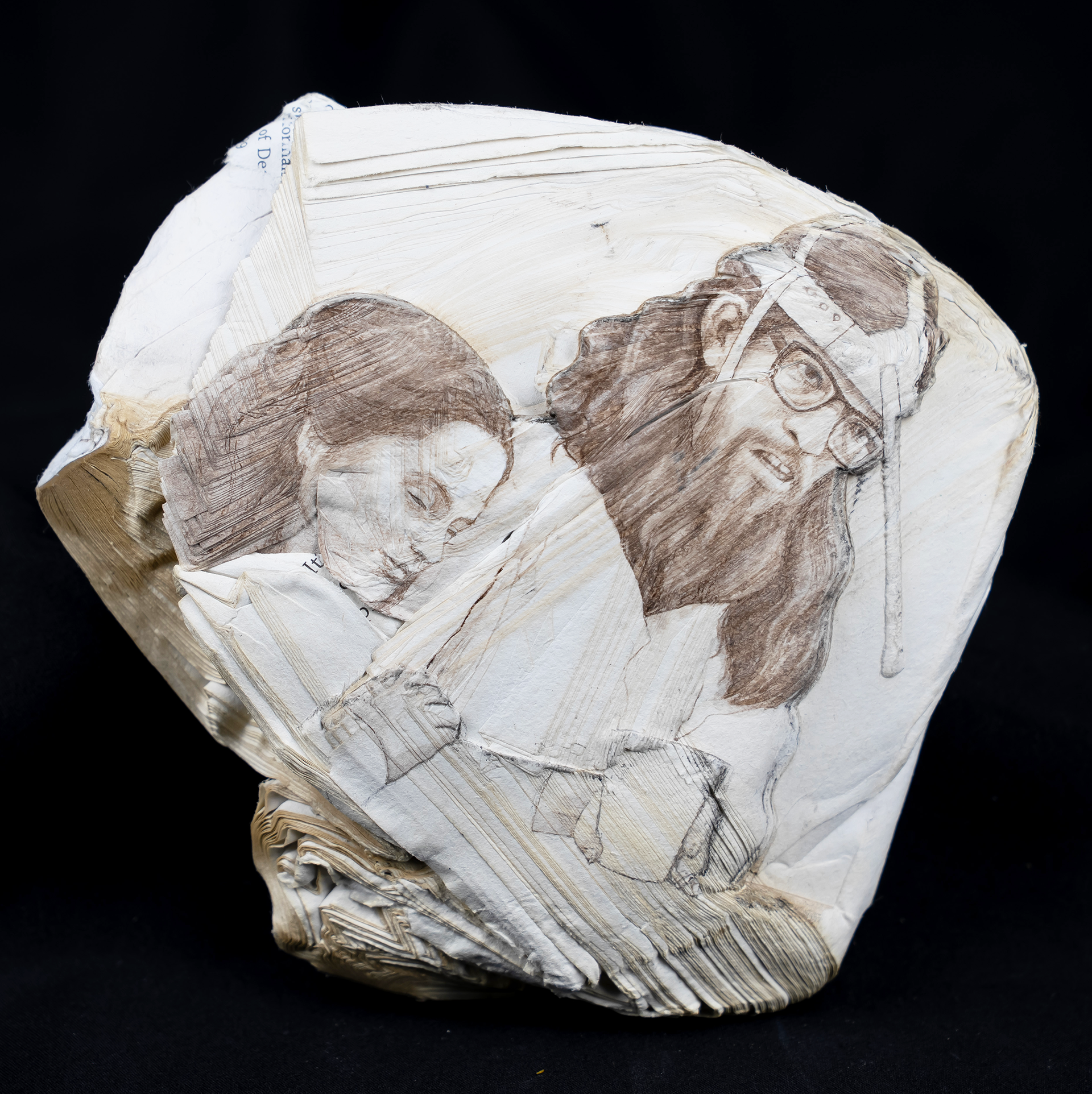
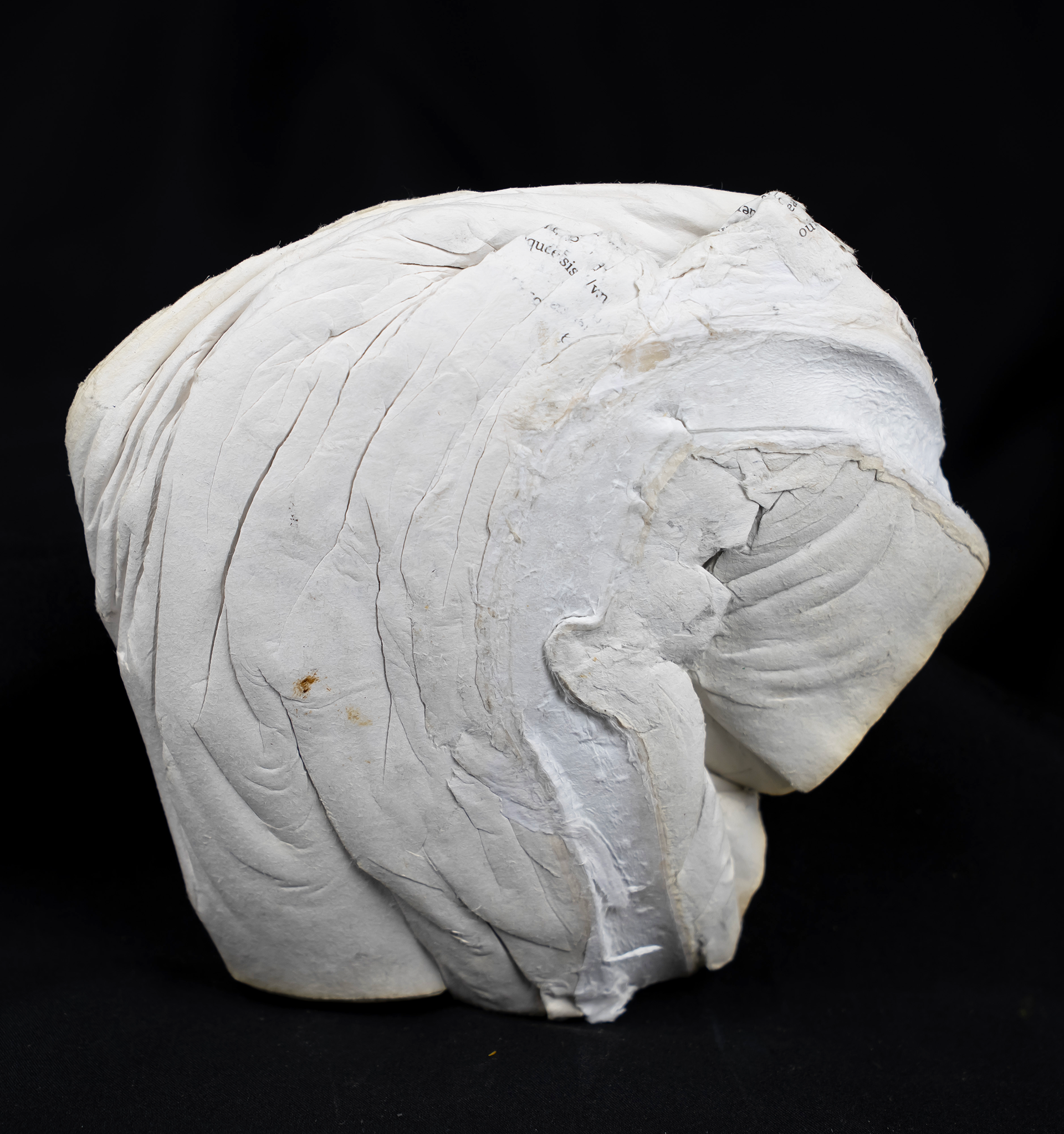
5. Title: Wasl Muscle: Protester Frank Moore. (Photograph by HolLynn D'Lil)
Medium: Watercolor on discarded book from SF, ‘Accelerate’, compress-embossed under 35k lbs.
Size: 7” x 6.5” x 1.5”
Medium: Watercolor on discarded book from SF, ‘Accelerate’, compress-embossed under 35k lbs.
Size: 7” x 6.5” x 1.5”
Frank More was a Berkeley-based activist and performance artist. He was non-verbal and used a pointer on his headgear and a letterboard to communicate.
6. Title: Wasl Muscle: Sleeping Protesters still from documentary, Crip Camp: A Disability Revolution, by Nicole Newnham and James LeBrech
Medium: Watercolor on discarded book from UC Berkeley library, ‘Hirohito and his Times', compress-embossed under 30k lbs.
Size: 8” x 6” x 2.5”
Medium: Watercolor on discarded book from UC Berkeley library, ‘Hirohito and his Times', compress-embossed under 30k lbs.
Size: 8” x 6” x 2.5”
Image Credit: Minoosh Zimordina
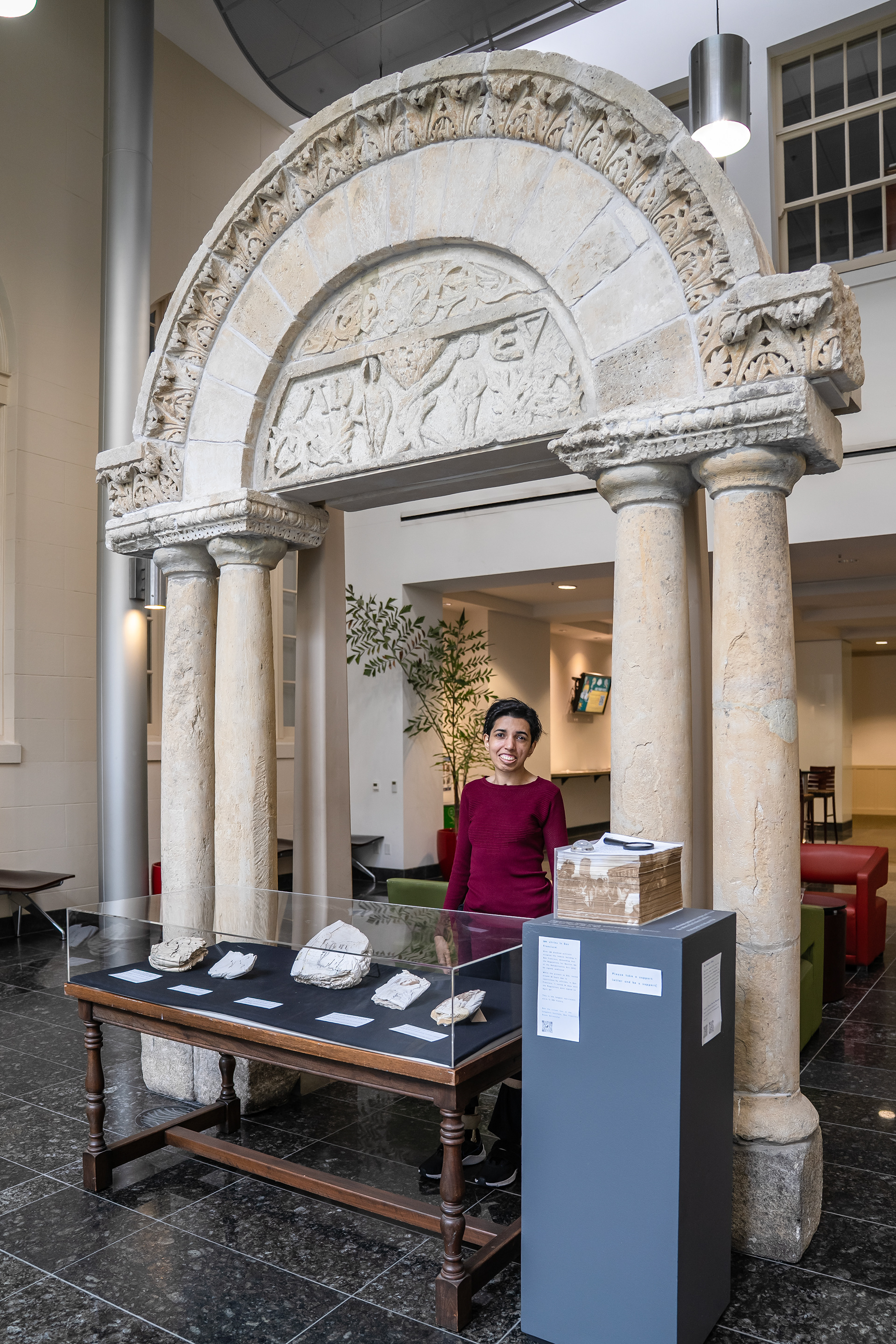
Display at Kalmanovitz Hall, University of San Francisco, under a 15th century stone arch.
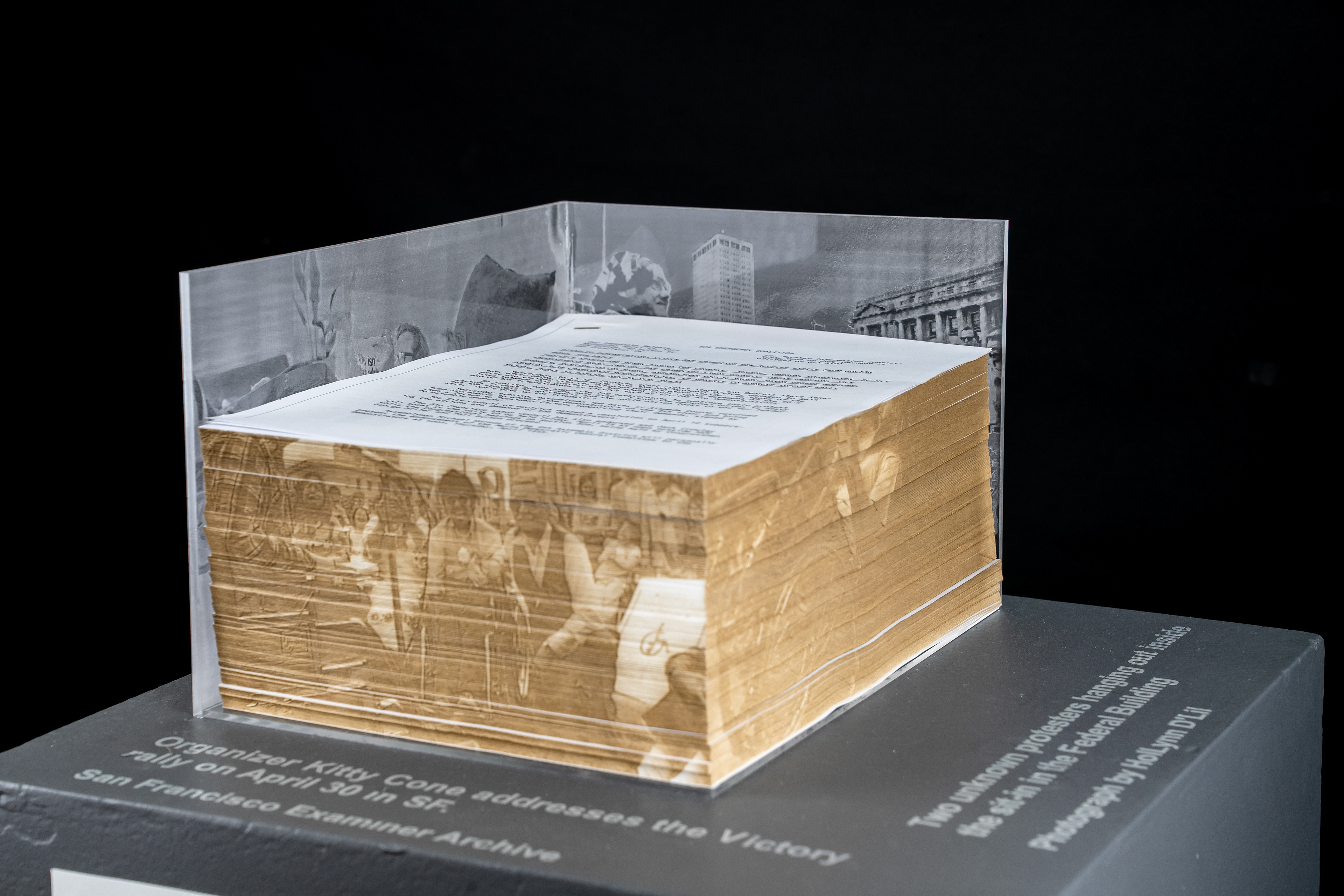
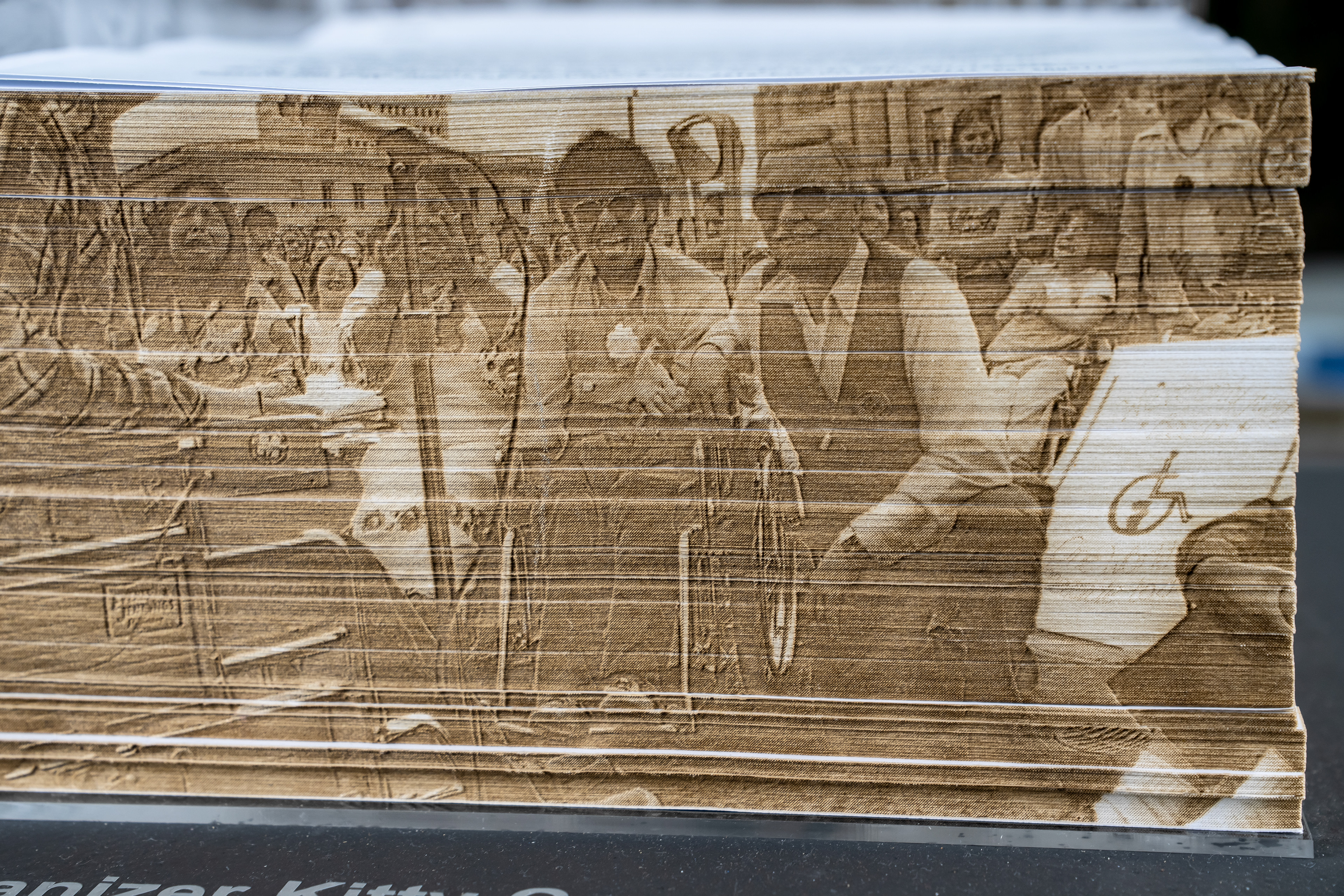
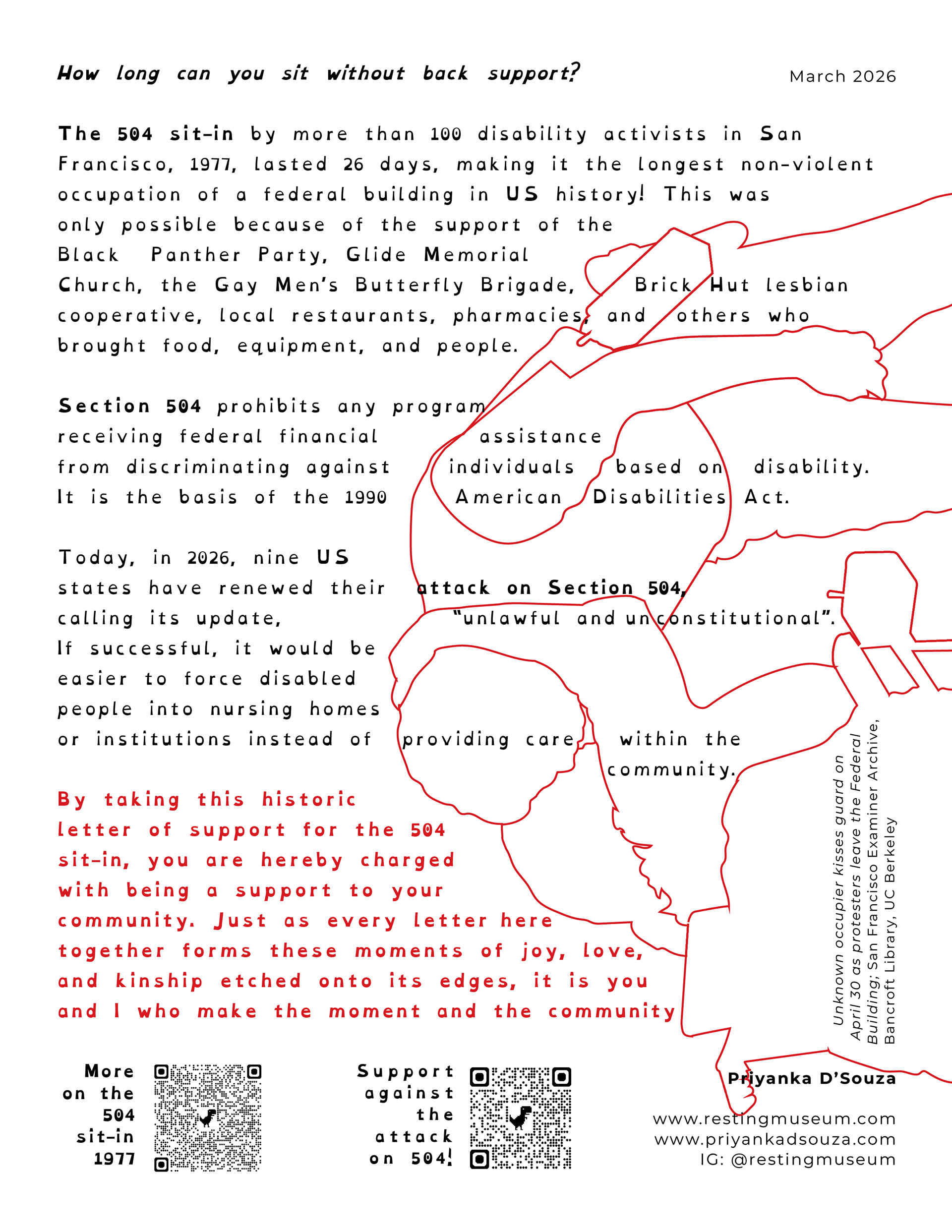
Title: 504 Support Stack: Unknown Occupier kisses Guard on April 30 as protesters leave the Federal Building.
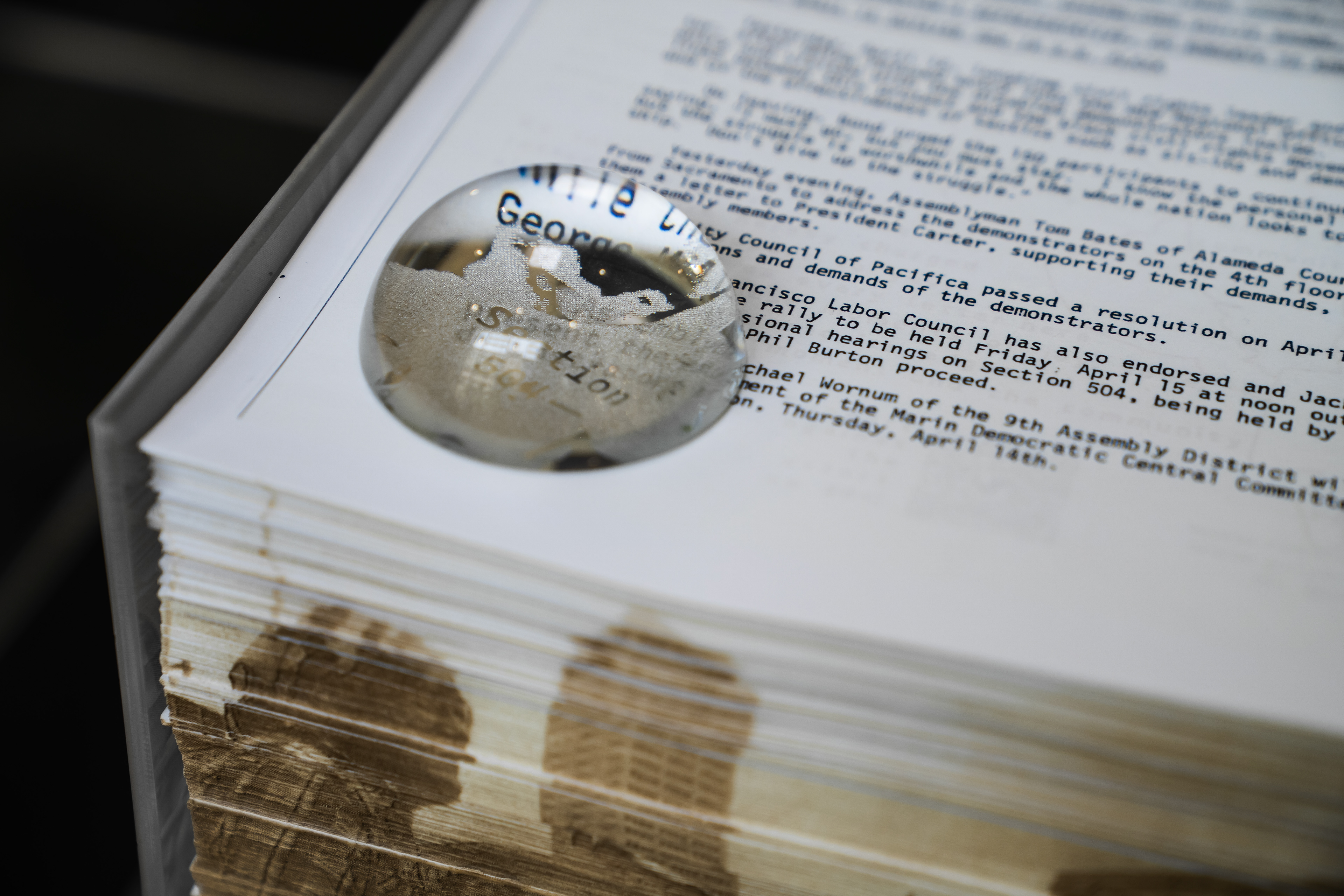
Medium: Laser etched stack of support letters received by the 504 sit-ins. Laser-etched glass paperweights.
Size: 6.5 in x 11.3 x 8.5 (stack); 2 in diameter x 2 in height (paperweight)
Medium: Laser etched stack of support letters received by the 504 sit-ins. Laser-etched glass paperweights.
Size: 6.5 in x 11.3 x 8.5 (stack); 2 in diameter x 2 in height (paperweight)
Moments of joy, love, and kinship are etched onto the support letters here. During display, viewers were encouraged to take a support letter home and be a support to their communities.
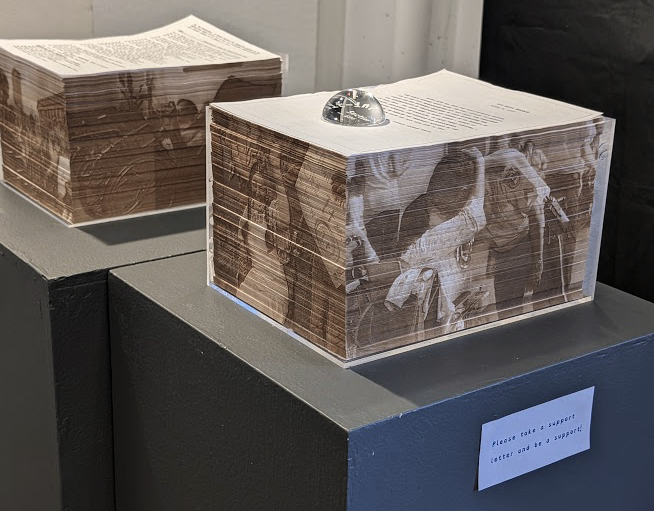
Back of the takeaway support letters in the support stack.
All work produced under the Ann Getty Institute Endowed Visiting Artist Scholarship '25-'26 at the University of San Francisco.
All image credits: Minoosh Zimordina
All image credits: Minoosh Zimordina